I promised that this next post would talk about the (many many) invasive plants I have to deal with (and some that I ignore), but I can’t be bothered to focus on them when there is so much exciting life in the garden. Scroll down to see some of the newest blooms and insects. But just to keep my promise somewhat, here is the biggest foe of all: Japanese knotweed (Fallopia japonica), which is a biological marvel, being nearly uncontrollable.
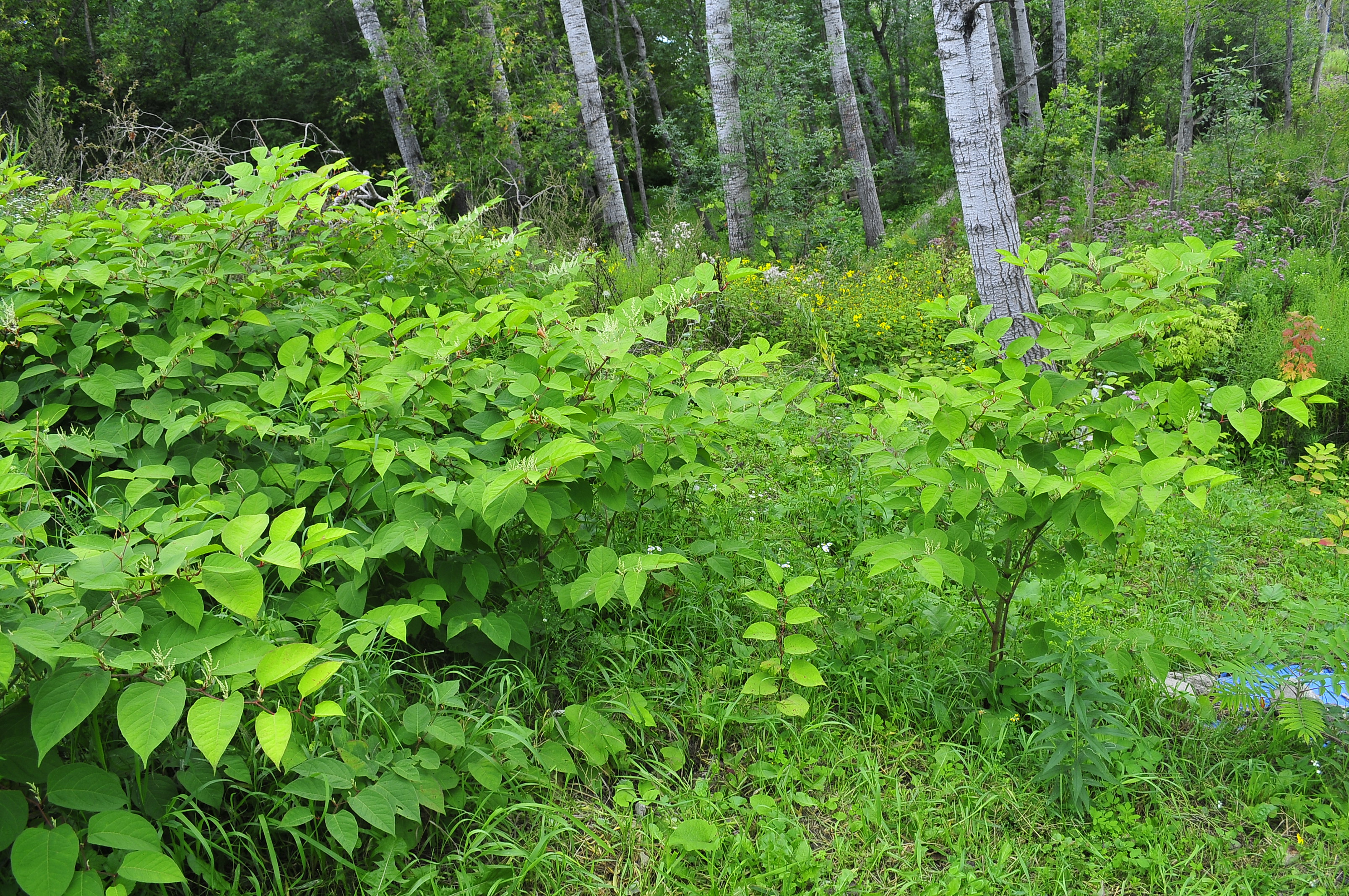
I just spent about two hours digging out a single stem I found growing by the creekside. I had to go about two and half feet deep, using water to loosen the soil to avoid breaking the extremely long and deep and brittle rhizomes. I know I didn’t get it all, but I think I came very close. If it grows back, it’ll be severely weakened and vulnerable to repeated pulling up. The same isn’t true of the bigger patch (above), which has literally been keeping me up at night. Should I call in a professional exterminator to spray them? Should I just cut and cut and cut them until their rhizomes starve (it might take 20 years or more)? I am terrified that it will spread into the floodplain blow.
Anyway, enough about that. Below, I’ve got some photos of what’s in bloom near Peterborough in late August. The predominant colour is yellow, mainly from many species of goldenrod (Solidago spp.), which pollinators love and which do not cause hay fever! (That’s ragweed, Ambrosia artemisiifolia, which flowers at the same time.) But the Joe Pye weed (Eutrochium purpureum) is also still flowering, as you can see below. It’s a bonanza for bees.

And here are some close-ups of other plants keeping me in a summer mood, along with some insects.
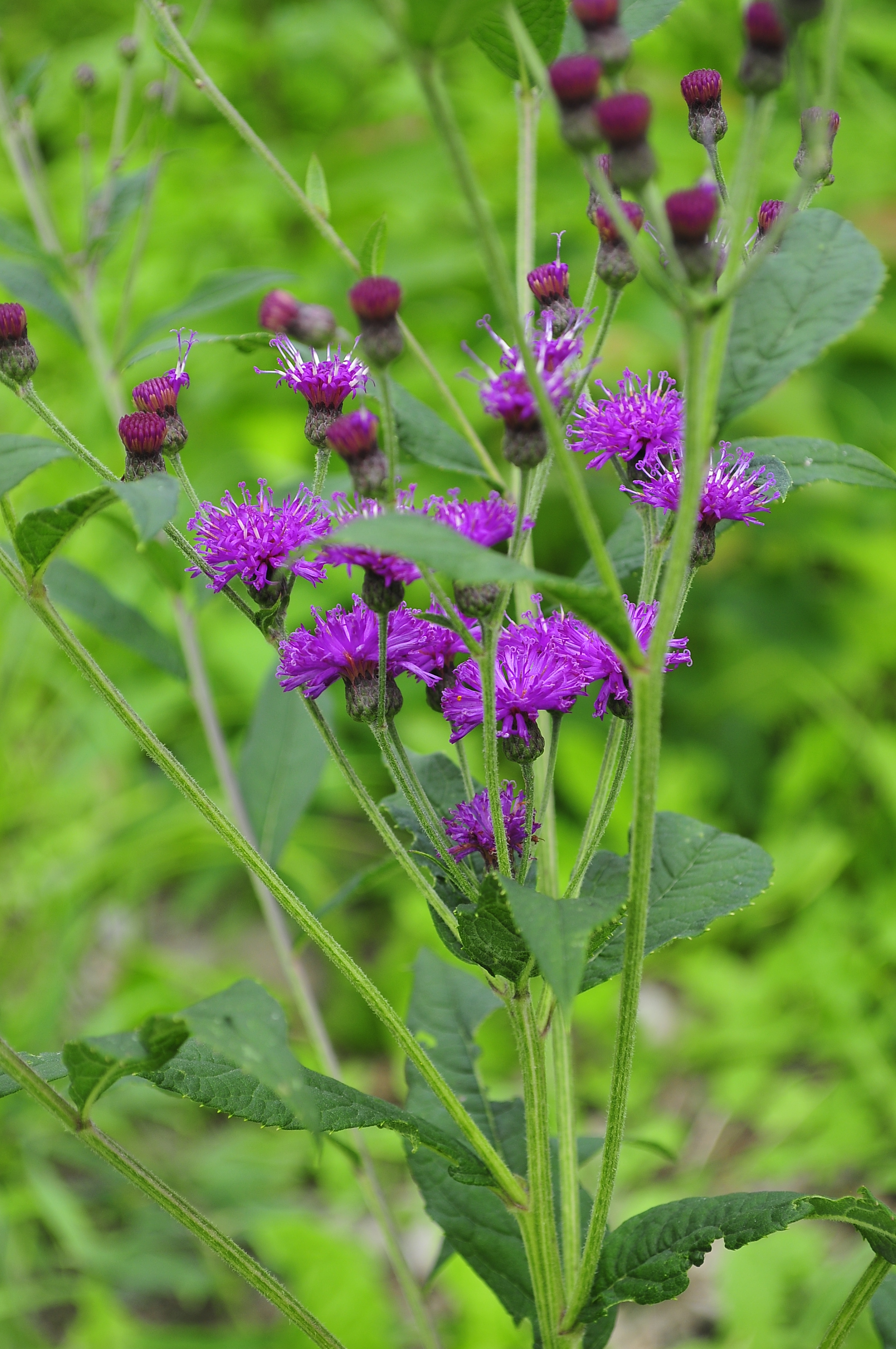


All these photos except the stick insect were taken yesterday (August 25, 2023). The stick insect was about two weeks ago. All were taken within 10 metres of my house. From top left, clockwise: tall ironweed (Vernonia gigantea), butterfly milkweed (Asclepias tuberosa), which is particularly orange this time around, with a honeybee (Apis mellifera); New England Aster (Symphyotrichum novae-angliae), with some late-flowering Bee-Balm (Monarda didyma); a small yellow crab spider amongst Joe Pye Weed (Eutrochium purpureum) flowers; a bee fly drinking nectar from New England Aster; a bumblebee deep in a Great Blue Lobelia (Lobelia siphilitica)–notice the pollen sacs on its hind legs; a stick insect, my first sighting ever; a small yellow beetle on Green-headed coneflower (Rudbeckia laciniata); and a bumble bee (probably Bombus impatiens) on a goldenrod (probably Solidago gigantea).
But that’s not all! I don’t know what this beetle is, but I’d never seen it before yesterday. Here it is hanging out in the goldenrod.

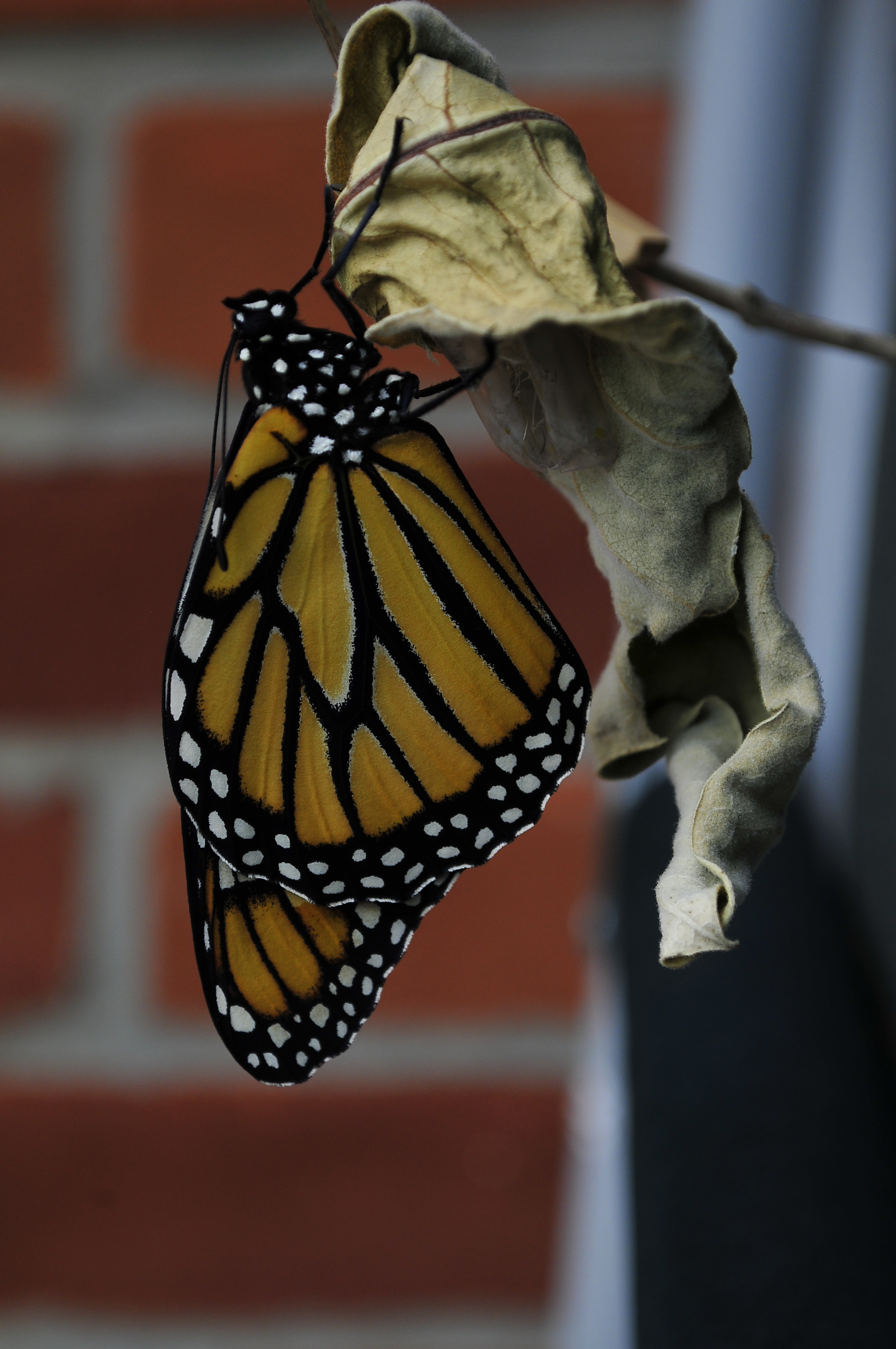
Tis also the season for adult monarch butterflies to emerge:
And more…

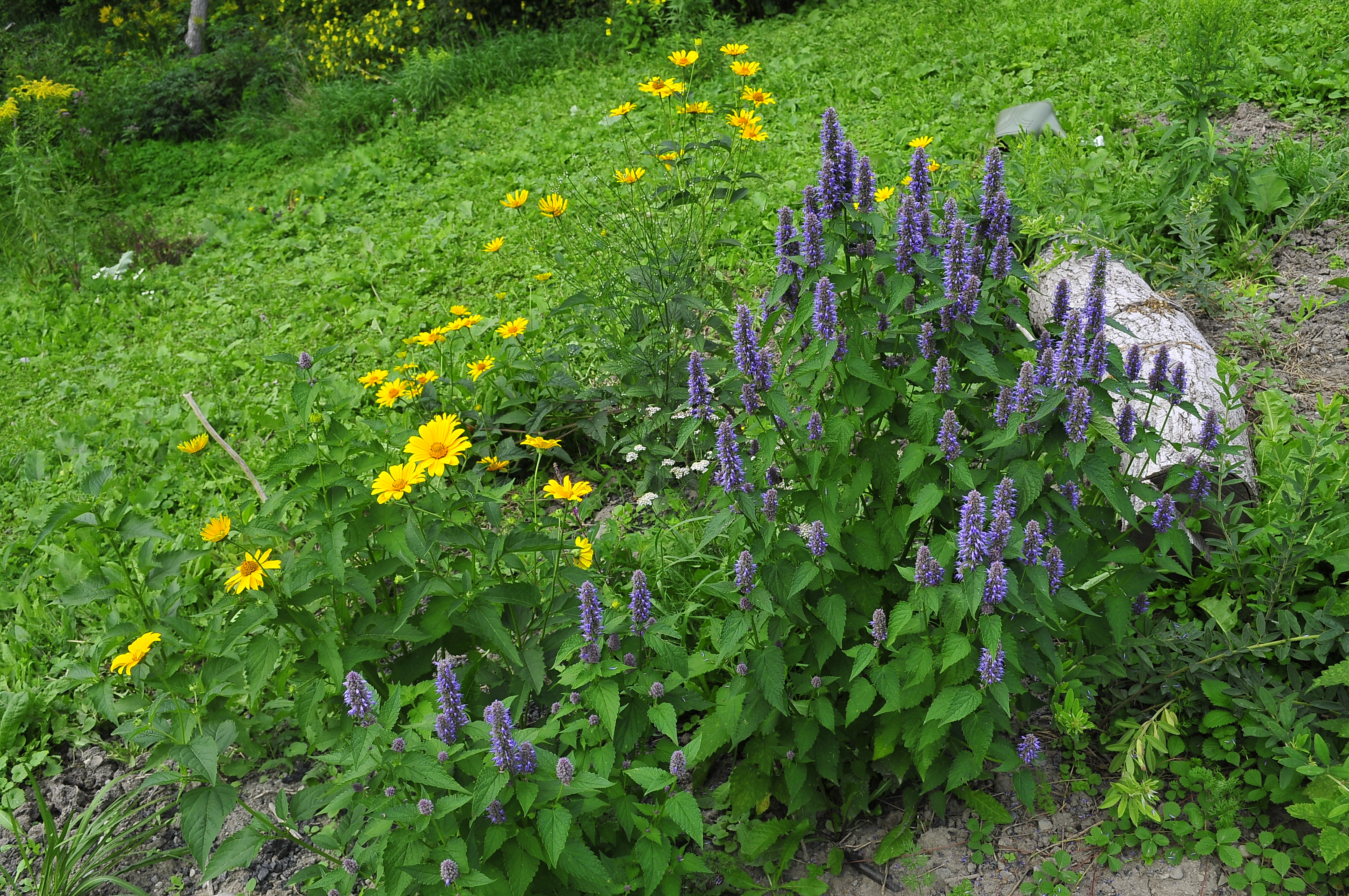


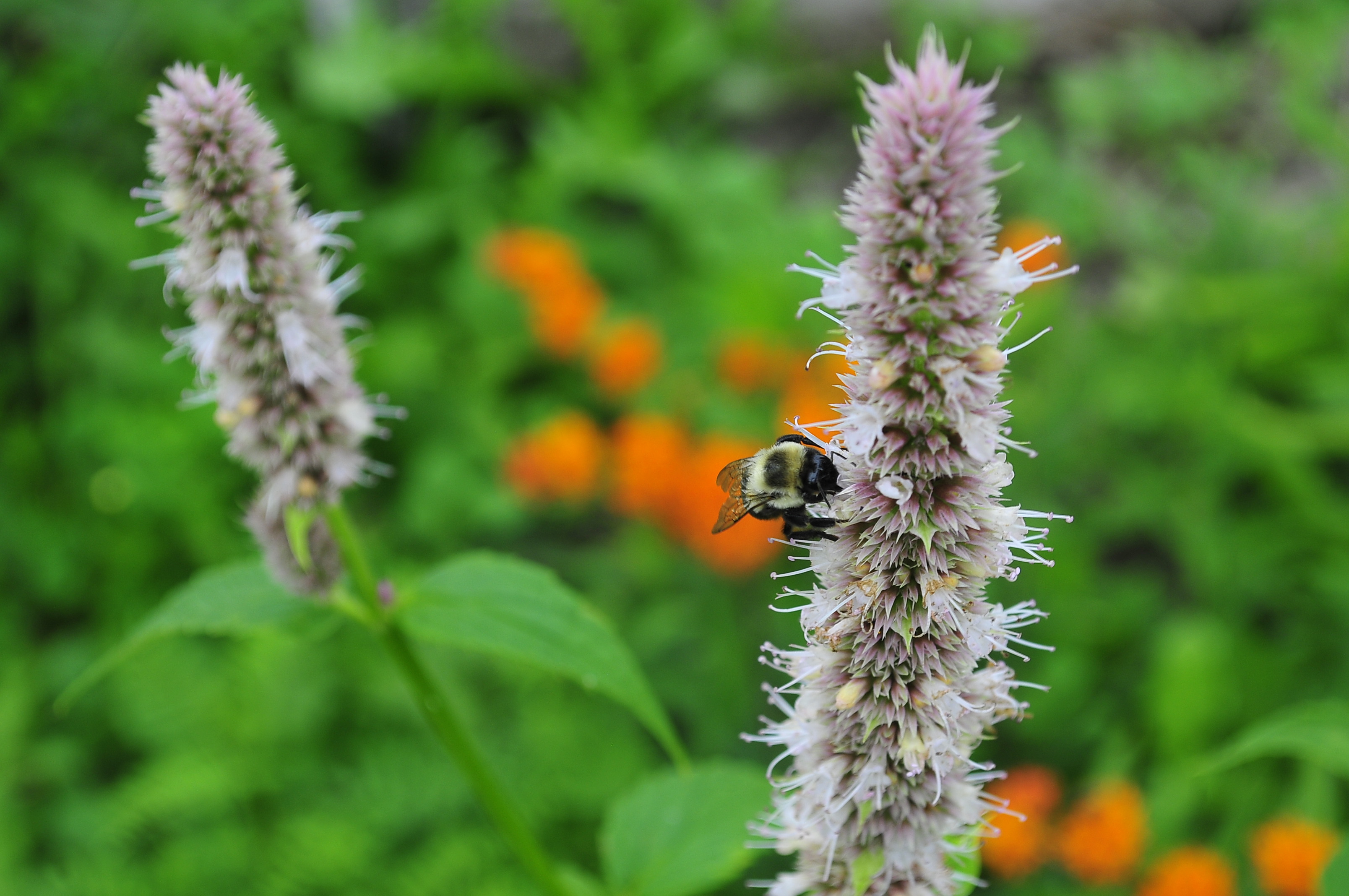


From top left, clockwise: a wasp on White Vervain (Verbena urticifolia); Anise Hyssop (Agastache foeniculum) and Smooth Oxeye (Heliopsis helianthoides); a beautiful, tiny black and red beetle on anise hyssop leaf; an unidentified bee or wasp on anise hyssop; a leafhopper on smooth oxeye; orange jewelweed (Impatiens capensis); White Snakeroot (Ageratina altissima), about to flower; Obediant Plant (Physostegia virginiana); Woodland Sunflower (Helianthus divaricatus) at the edge of a Black Locust (Robinia pseudoacacia) and Sugar Maple (Acer saccharum) wood; a view of what used to be lawn just a few months ago–the remaining lawn is not long for this world; bumble bee on Yellow Giant Hyssop (Agastache nepetoides); a yellowjacket (Vespula sp.) on a windfall apple; Boneset (Eupatorium perfoliatum) in bloom, with some Wild Lupine (Lupinus perennis) leaves in the background; Round-headed Bush Clover (Lespedeza capitata).
 DANIEL AURELIANO NEWMAN