Fantastic paragraphs (iv)

It’s been ages since my last contribution to what I hoped would be a large archive of posts on fantastic paragraphs from fiction and other sources. Two or more years in, I’m only posting my fourth paragraph, and all so far have been from fiction. Oh well. I’ll get on it this year.

This paragraph is from my favourite contemporary novel and a strong contender for my favourite novel ever: Claire-Louise Bennett’s Pond (2015). The whole book is a master-class of prose style, featuring one of the most singularly eccentric and lively narrators I’ve ever encountered–this narrator inhabits that rarefied sphere of Laurence Sterne’s Tristram Shandy and Samuel Beckett’s Unnamable. And this is my favourite paragraph in this novel.

It begins so that you’ll think it’ll be a paragraph about gardening–then drifts hilariously toward an entirely different, if not completely unrelated, conclusion:

But the potato plants were still growing! I went over to see my upbeat boyfriend many times and the potatoes and spinach and broad beans didn’t mind one bit and sometimes while I was away I would lie in bed next to him unable to sleep and think of the potatoes and spinach and broad beans out there in the dark and I’d splay my fingers towards the ceiling and feel such yearning! I could recall the soil very well, how dark it was and the smell of it — as if it had never before been opened up, and the canal was nearby, and the moon was always overhead, and spiders would get off their webs for a bit and tentatively come into contact with the still edges of things. We didn’t get along very well but this had no bearing whatsoever on our sexual rapport which was impervious and persuasive and made every other dwindling aspect of our relationship quite irrelevant for some time. We wrote each other hundreds of lustful emails, and by that I mean graphic and obscene. It was wonderful. I’d never done that before, I’d never written anything salacious before, it was completely new to me and I must say I got the hang of it really very quickly. I wish I’d kept them, I wish I hadn’t become quite so unhinged when finally we acknowledged that eighteen months was pretty well as much as we could expect from a relationship based almost entirely upon avid fornication, and thereupon rashly expunged our complete correspondence, which, by then, amounted to almost two thousand emails. I won’t be able to write emails like that again you see – that’s to say I won’t be able to write emails like that for the first time again. And that really was what made them so exciting – using language in a way I’d not used it before, to transcribe such an intimate area of my being that I’d never before attempted to linguistically lay bare. It was very nice I must say to every now and then take a break from cobbling together yet another overwrought academic abstract on more or less the same theme in order to set down, so precisely, how and where I’d like my brains to be fucked right out.

Claire-Louise Bennett, Pond, pp. 15-16)

I bet no one expected to end here based on the beginning. This is only a teaser of what is a superlatively great novel. It’s got no plot, and its action is all in the voice, so be warned. But it’s worth it, so worth it.

Late August is peak flower and insect time

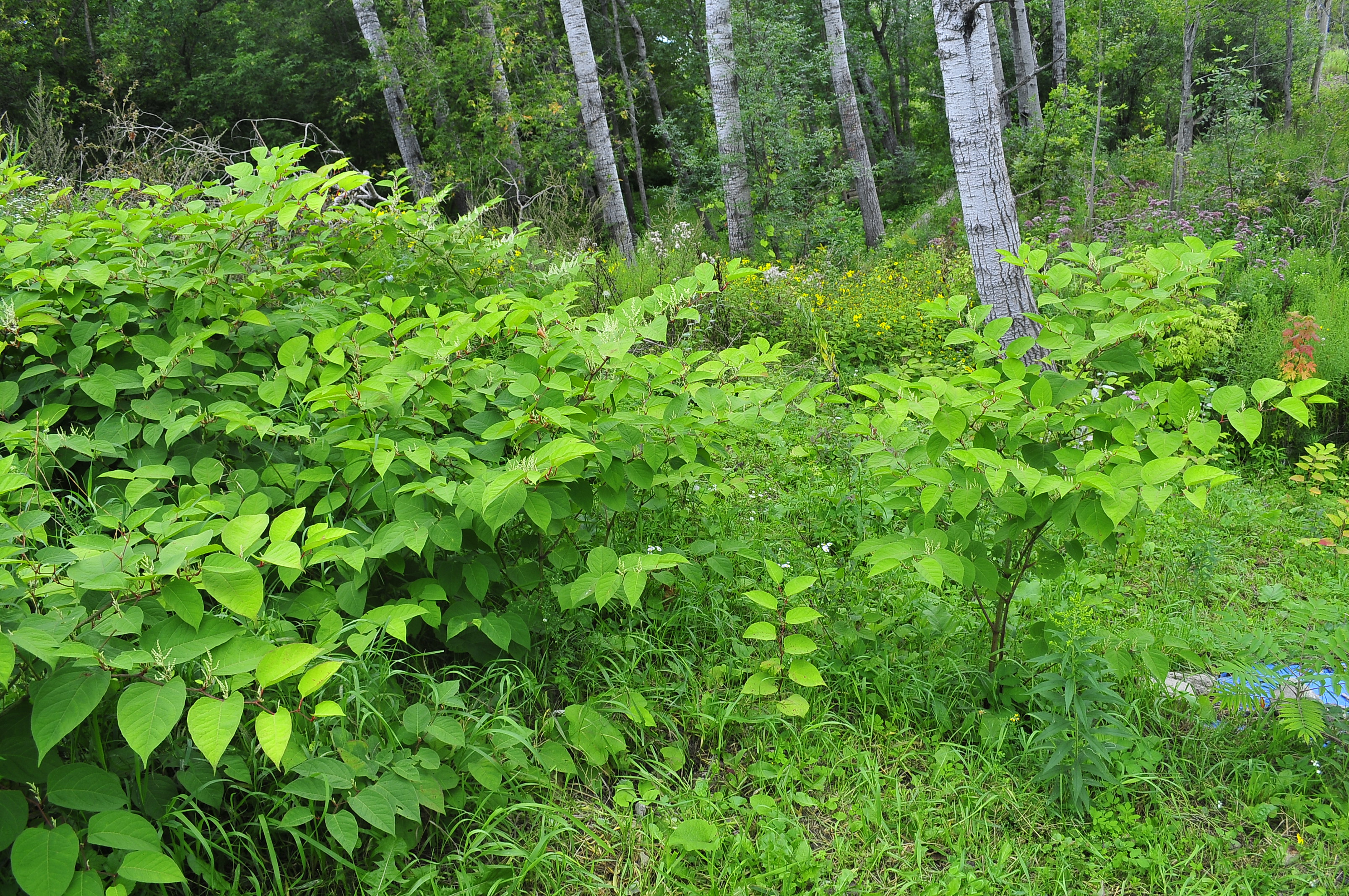
I promised that this next post would talk about the (many many) invasive plants I have to deal with (and some that I ignore), but I can’t be bothered to focus on them when there is so much exciting life in the garden. Scroll down to see some of the newest blooms and insects. But just to keep my promise somewhat, here is the biggest foe of all: Japanese knotweed (Fallopia japonica), which is a biological marvel, being nearly uncontrollable.

I just spent about two hours digging out a single stem I found growing by the creekside. I had to go about two and half feet deep, using water to loosen the soil to avoid breaking the extremely long and deep and brittle rhizomes. I know I didn’t get it all, but I think I came very close. If it grows back, it’ll be severely weakened and vulnerable to repeated pulling up. The same isn’t true of the bigger patch (above), which has literally been keeping me up at night. Should I call in a professional exterminator to spray them? Should I just cut and cut and cut them until their rhizomes starve (it might take 20 years or more)? I am terrified that it will spread into the floodplain blow.

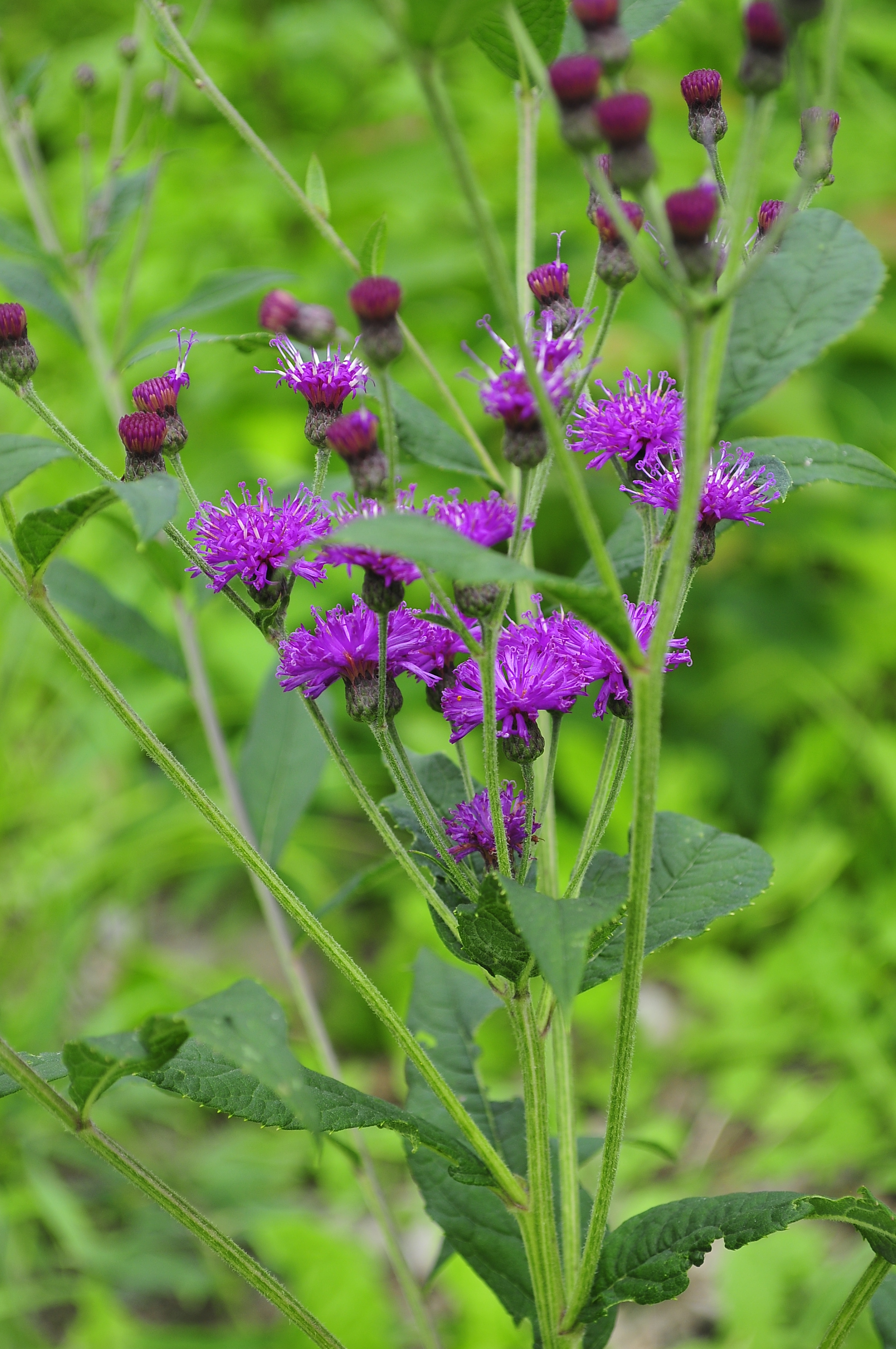
Anyway, enough about that. Below, I’ve got some photos of what’s in bloom near Peterborough in late August. The predominant colour is yellow, mainly from many species of goldenrod (Solidago spp.), which pollinators love and which do not cause hay fever! (That’s ragweed, Ambrosia artemisiifolia, which flowers at the same time.) But the Joe Pye weed (Eutrochium purpureum) is also still flowering, as you can see below. It’s a bonanza for bees.

And here are some close-ups of other plants keeping me in a summer mood, along with some insects.

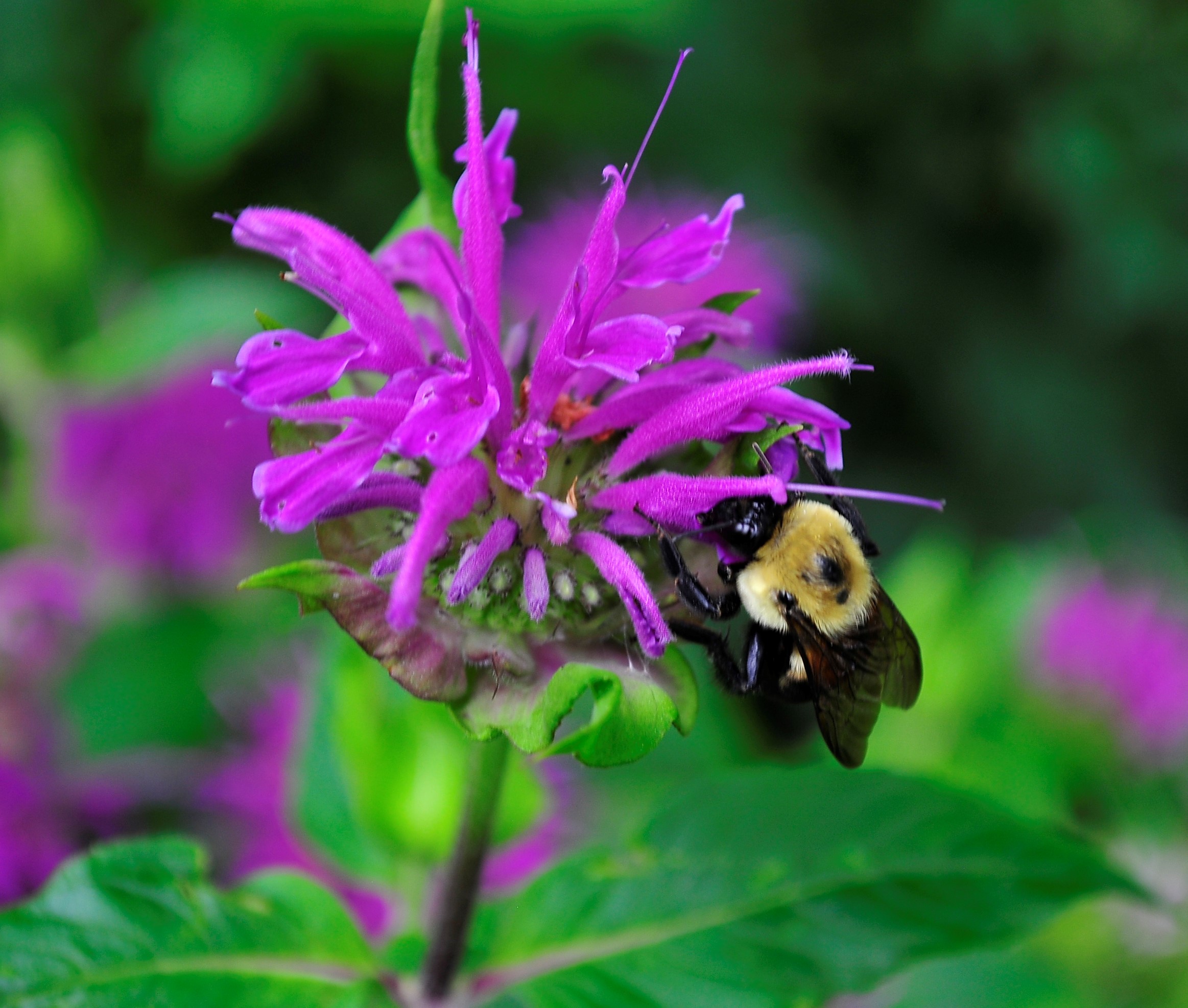
All these photos except the stick insect were taken yesterday (August 25, 2023). The stick insect was about two weeks ago. All were taken within 10 metres of my house. From top left, clockwise: tall ironweed (Vernonia gigantea), butterfly milkweed (Asclepias tuberosa), which is particularly orange this time around, with a honeybee (Apis mellifera); New England Aster (Symphyotrichum novae-angliae), with some late-flowering Bee-Balm (Monarda didyma); a small yellow crab spider amongst Joe Pye Weed (Eutrochium purpureum) flowers; a bee fly drinking nectar from New England Aster; a bumblebee deep in a Great Blue Lobelia (Lobelia siphilitica)–notice the pollen sacs on its hind legs; a stick insect, my first sighting ever; a small yellow beetle on Green-headed coneflower (Rudbeckia laciniata); and a bumble bee (probably Bombus impatiens) on a goldenrod (probably Solidago gigantea).

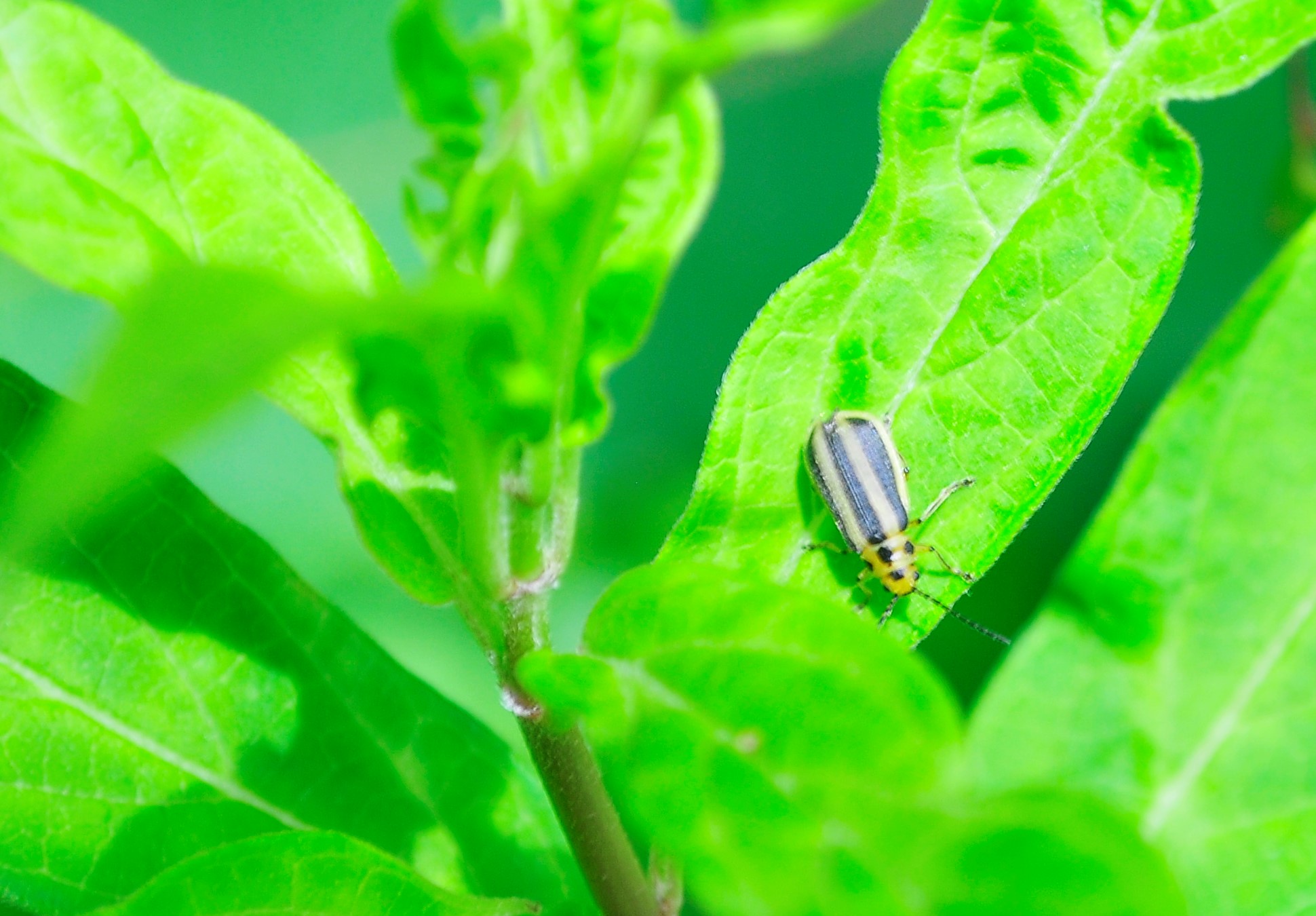
But that’s not all! I don’t know what this beetle is, but I’d never seen it before yesterday. Here it is hanging out in the goldenrod.

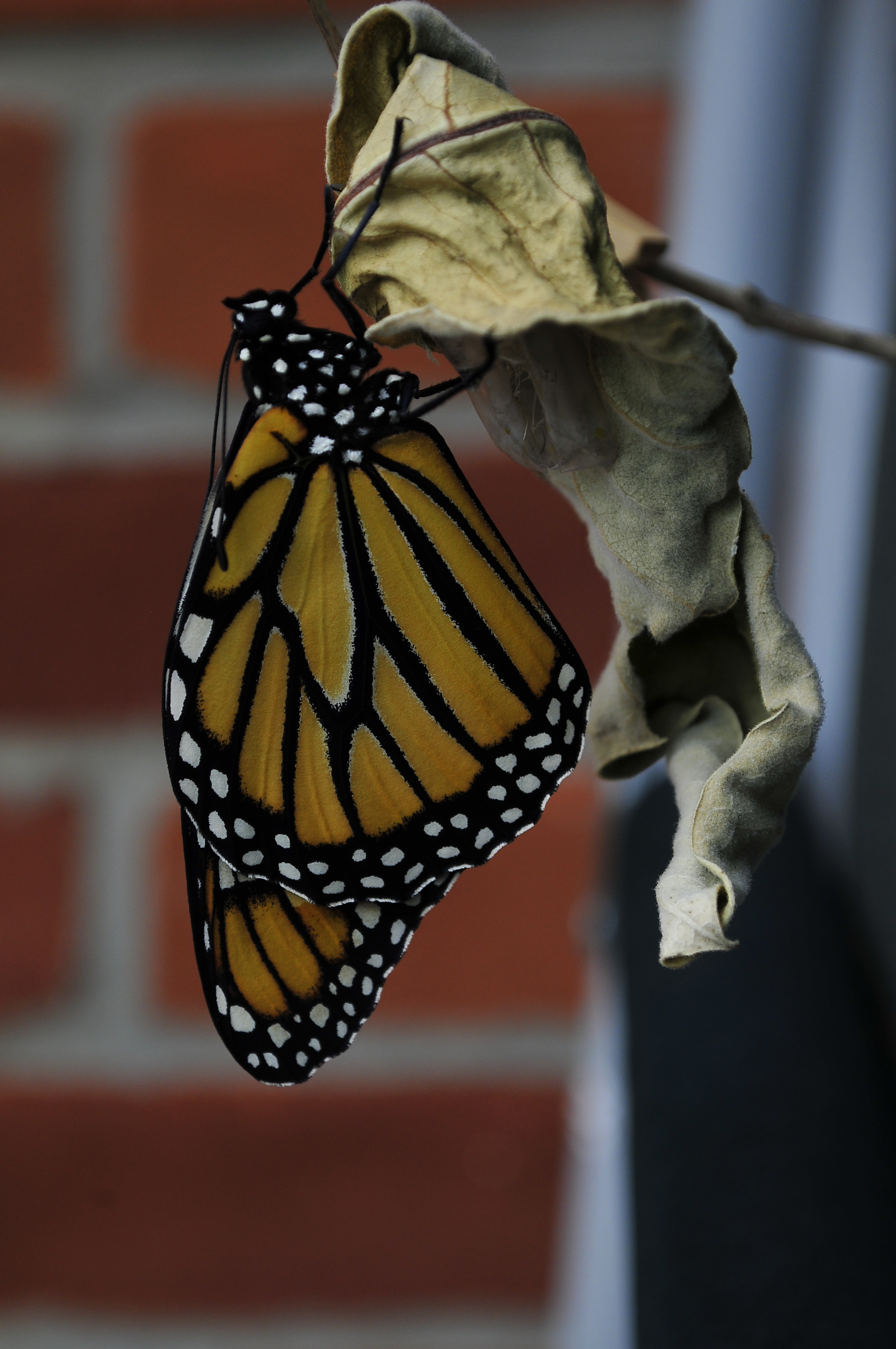
Tis also the season for adult monarch butterflies to emerge:

And more…

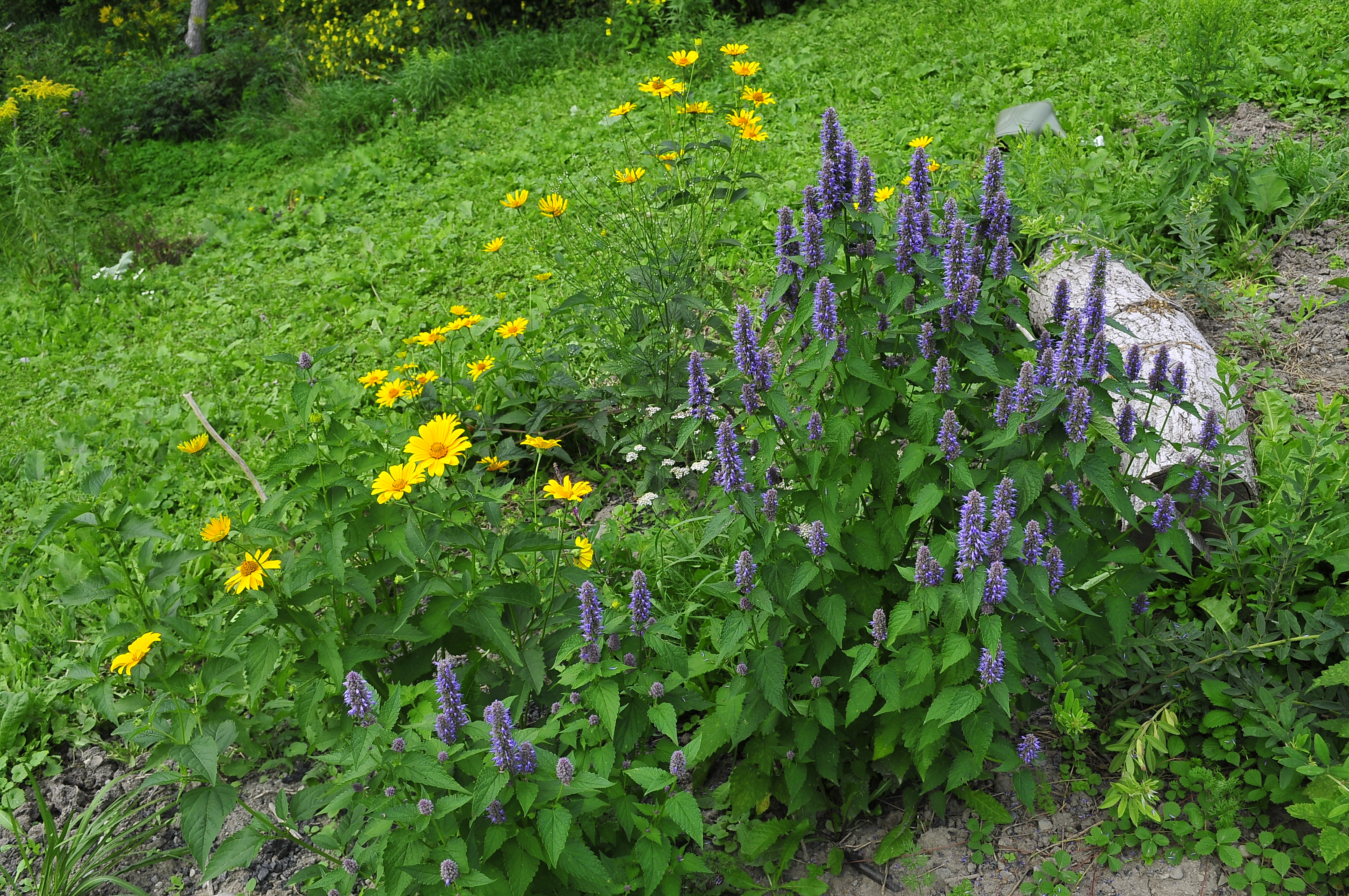
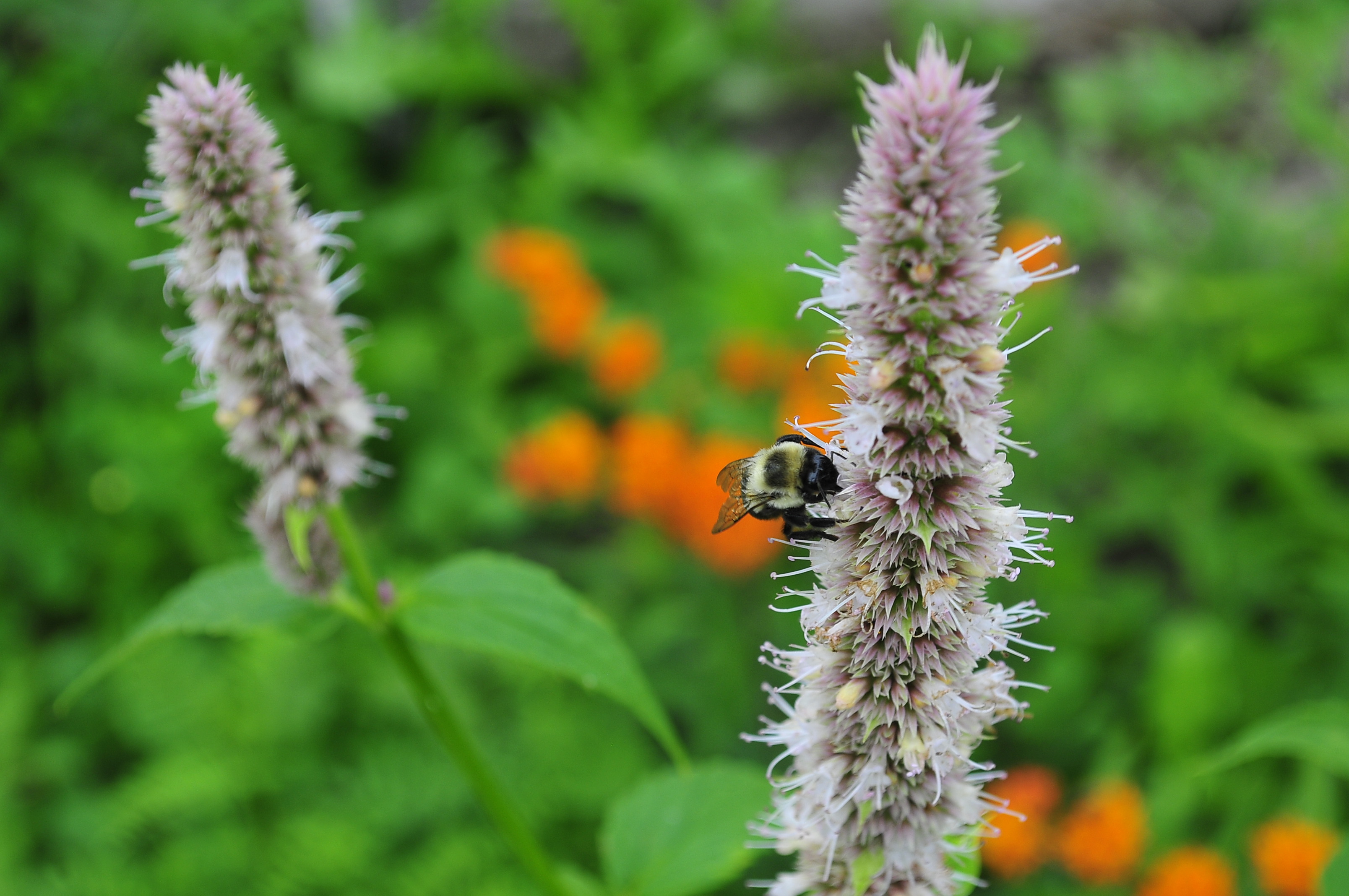
From top left, clockwise: a wasp on White Vervain (Verbena urticifolia); Anise Hyssop (Agastache foeniculum) and Smooth Oxeye (Heliopsis helianthoides); a beautiful, tiny black and red beetle on anise hyssop leaf; an unidentified bee or wasp on anise hyssop; a leafhopper on smooth oxeye; orange jewelweed (Impatiens capensis); White Snakeroot (Ageratina altissima), about to flower; Obediant Plant (Physostegia virginiana); Woodland Sunflower (Helianthus divaricatus) at the edge of a Black Locust (Robinia pseudoacacia) and Sugar Maple (Acer saccharum) wood; a view of what used to be lawn just a few months ago–the remaining lawn is not long for this world; bumble bee on Yellow Giant Hyssop (Agastache nepetoides); a yellowjacket (Vespula sp.) on a windfall apple; Boneset (Eupatorium perfoliatum) in bloom, with some Wild Lupine (Lupinus perennis) leaves in the background; Round-headed Bush Clover (Lespedeza capitata).

New garden, new world

It’s been a while since I last posted about my garden-based explorations of my yard and its plant and insect life–the outdoor counterpart to close-reading literature. In part this is because since last July (2022) I have been living in a new place, about 2 hours out of Toronto. While I miss the city for many reasons (friends, food, a 15 minute commute to work by bike), here I have the benefit of a lot more land to work with.

Much of the property is wild, so apart from removing buckthorn and other highly aggressive invasive plants, I leave those parts alone. But about an ace or more was lawn when we moved here. I say was because I’m chipping away at it. There’s now a pretty large vegetable garden, and the rest is on its way to being a massive native plant area.

The last few days (August 2023) have been a potent mix of hot sunny weather and intense downpour, so the plants are growing madly. The bees are out in force, among other pollinators (a saw a ruby-throated hummingbird at the bee-balm the other day). So here’s a sampling of the view up close.

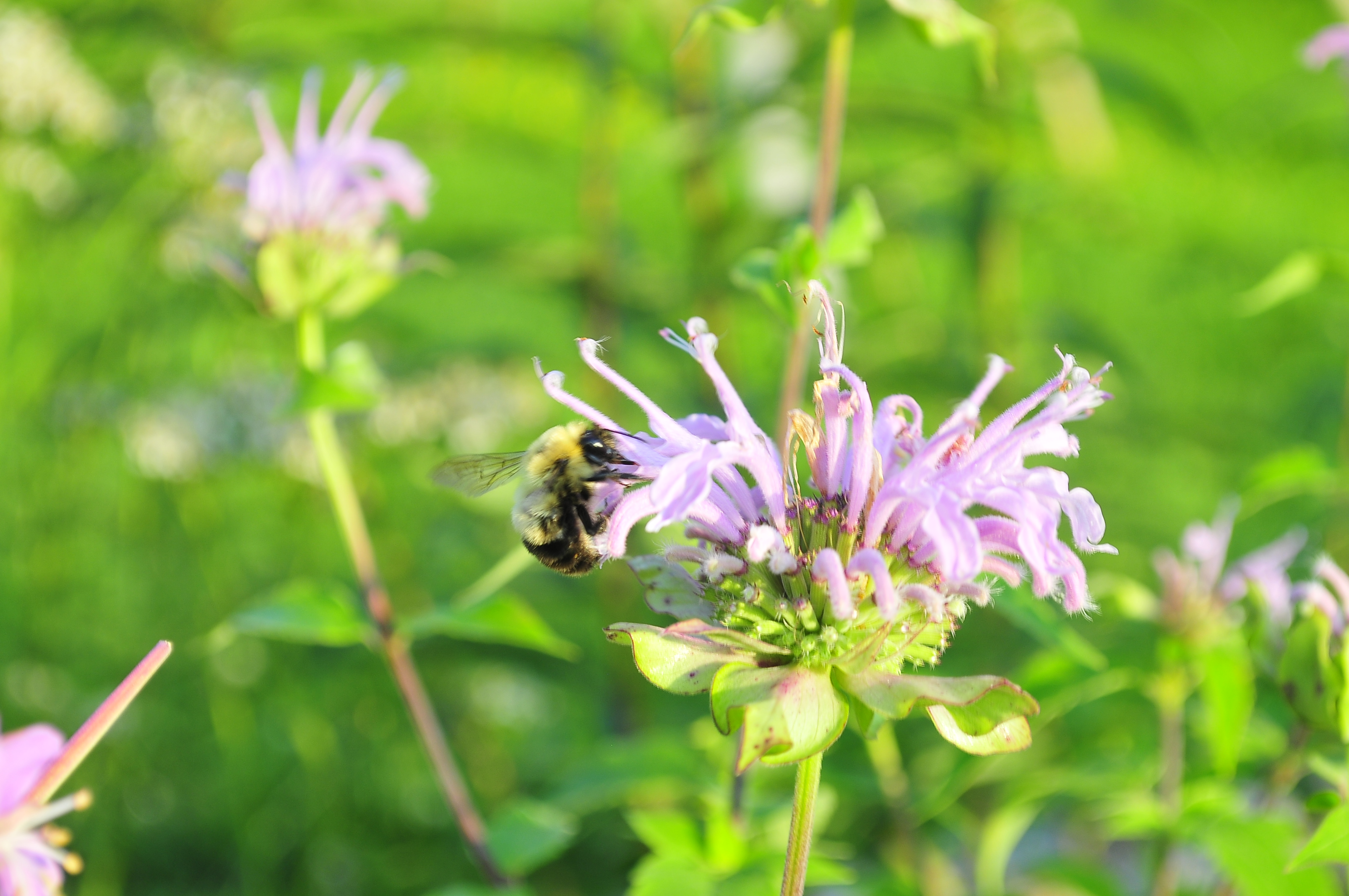
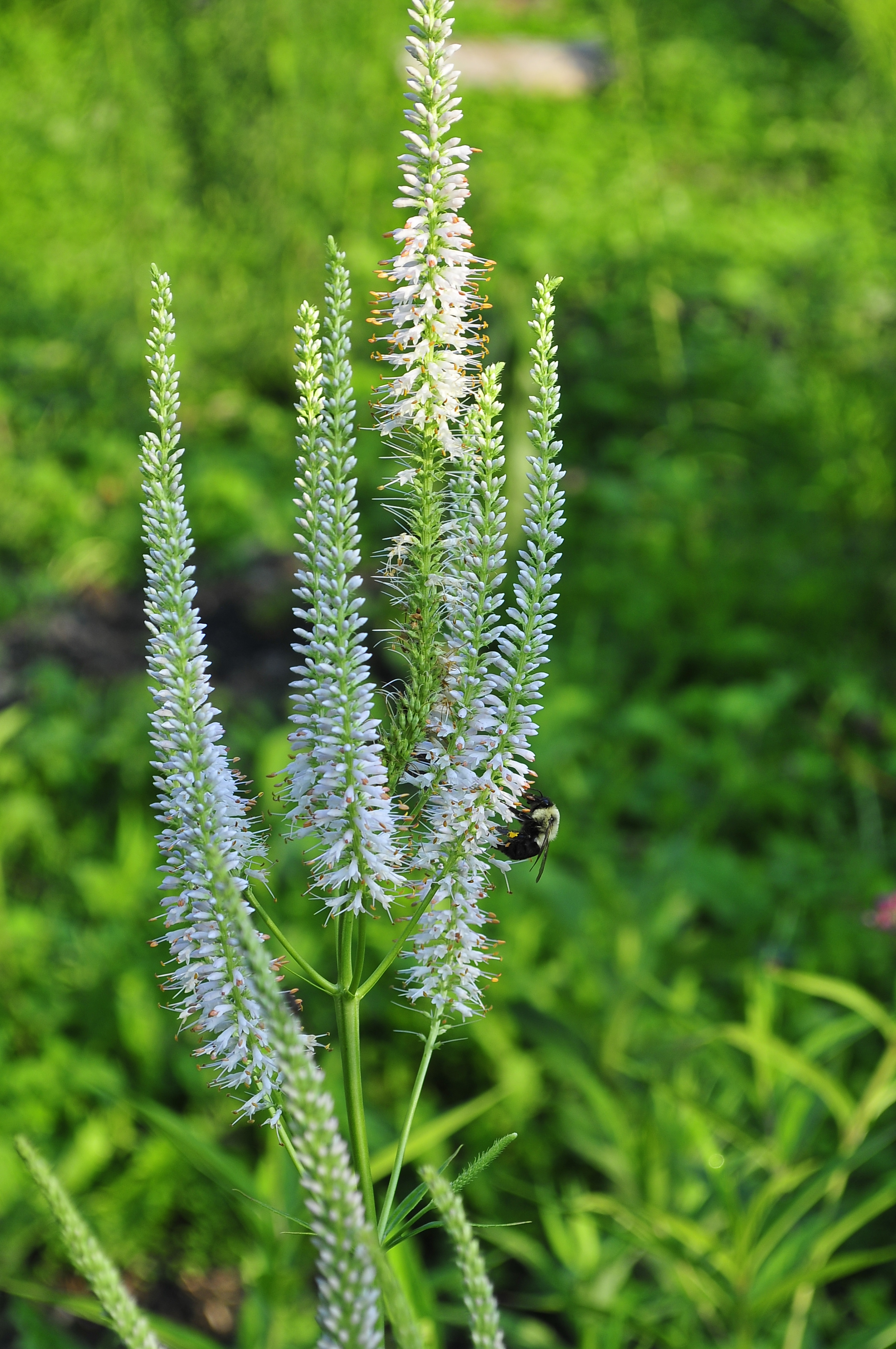
From top left, roughly clockwise: Bombus impatiens about to land on a fireweed flower (Chamaenerion angustifolium); backlit wild bergamot (Monarda fistulosa); butterfly weed (Asclepias tuberosa); wild black raspberries (Rubus occidentalis), which are delicious; this year’s pride a joy, Culver’s root (Veronicastrum virginicum), visited by an unidentified bumble bee; marsh milkweed (Asclepias incarnata), one of the most impressive native flowers around; a honey bee (Apis mellifera) on an enormous purple coneflower (Echinacea purpurea); boneset (Eupatorium perfoliatum) about to burst into bloom; jewelweed (Impatiens capensis); a bumble bee feasting on wild bergamot nectar; and blue vervain (Verbena hastata).

I’ll try to post more plants, and especially more insects in the coming days and weeks. I will also feature some of the plants I’m trying to control, including the notorious Japanese knotweed (Fallopia japonica) and the voracious goutweed (Aegopodium podagraria).

Insects of my garden

I just found this post in my drafts from July 2021. I no longer have this garden, now that I live outside Toronto. The plants and insects in that small space were the thing I loved most about that home. Here are, clockwise from top left, some aphids on cup plant; a hawkmoth visiting common milkweed flowers; a lady beetle on cup plant, again with aphids; a solitary bee on purple coneflower; a stink bug (I think) on giant hyssop; a small wasp on wild bergamot; a tiny solitary bee on Queen Ann’s Lace; a bumble bee queen on lavender; a gorgeous yellow fly on a milkweed leaf; tiny solitary bees on wild bergamot; some kind of beetle (perhaps a weevil) on a plant I can’t identify from the photo; a small beetle on marsh milkweed; and a lacewing on common milkweed.

I initially collected these photos for young Finn, who was worried about the decline of insects in the world. There is lots to worry about. But there is plenty of joy and wonder to be had from insects close to home nonetheless.

How ChatGPT can change the conversation about summarizing and revising in scholarly writing

To begin, a caveat: I know almost nothing about Large Language Models (LLMs) in general or ChatGPT in particular. I will also admit that my immediate reaction is to want to hide my head in the sand, to fall back on the old humanist values of originality and that ineffable concept that often goes by the name of “soul.” Finally, I will not hide my pleasure at the fact that that GPT (Generative Pre-trained Transformer) pronounced in French sounds like “J’ai pété” (“I farted”). It won’t stop the spread of this kind of technology, but at least it gives me a measure of puerile amusement.

As someone whose primary job is to work with graduate students on their scholarly writing, the accessibility and power of ChatGPT (and other such bots) inevitably raises concern, but I agree that it is an opportunity to rethink assignments and how we assess knowledge, learning and critical thinking.

My discussion here is specifically about one aspect of scholarly writing that is both massively important and chronically undervalued: revision. I don’t mean editing, which is a relatively mechanical task, involving correcting small errors in spelling, word choice, punctuation and syntax. I actually think a bot could be very helpful as a copy-editor. I mean revision, the larger, structural and stylistic transformations that more or less gradually turn a messy draft into a coherent, cohesive piece of writing.

Writers often dread revision. I suspect that this is in part because many writers, and particularly graduate students, still think of writing in terms of product without recognizing the importance of process. The need to revise can feel like a problem or even a failure if what we have in mind is the perfect final product. In my workshops I try to change this view by framing revision as a necessary good, rather than a necessary evil (let alone a mark of failure to get it right the first time–an impossible goal with any writing that achieves something new).

Why do drafts of a dissertation chapter or journal article almost always need at least one or two rounds of significant revision? Because drafts are a form of pre-writing, of outlining. Don’t think of them as an attempt at the final product. Think of drafts as an outline in prose, a sketch of the chapter/article to be. This is why revision is necessary: revision takes the inevitably messy/shitty draft and re-shapes it into something closer to the final product, though it may need revisions of its own.

Here’s where ChatGPT comes back in. Until yesterday, I had thought of this technology as something that could write for you. What I had seen of ChatGPT’s outputs made me think the panic about it was far overblown. From what I could tell, the bot could write convincingly like a human, but not like a human who knows how to write. The best outputs I had seen were C+/B- level at a first-year university level, to be generous. For now, then, I didn’t see ChatGPT as a problem for graduate writers, who as a whole aim for something rather better than a B- at a Biology 101 level.

But yesterday I attended a discussion on ChatGPT and its implications for graduate education, and I was made aware of some of the other functions that actually complicate my response. I mean specifically its ability to summarize texts and to revise drafts. This made me more nervous, not because I felt that it threatens my job but because I can definitely see the appeal of these functions for many graduate researchers. I can imagine that a graduate student would want to use GPT to summarize an article they’re reading, or to summarize their own article into an abstract. I can also imagine a harried grad student wanting automated help in transforming a messy first draft into something a bit more shapely. As you can probably guess from what I said about revision’s role above, this is worrying.

First, summarizing. Summarizing is a basic skill for researchers who engage with huge amounts of readings, and it’s a difficult one. Summarizing is often also an unpleasant task–I know this from having to write abstracts summarizing my own articles, and really finding the work unexciting and frustrating. How tempting to get a bot to do it for you! But here’s the thing: summarizing is not a neutral task. Like translation, summary is an interpretation. When you summarize your own article–or someone else’s–you’re not just extracting its basic points: you’re choosing what counts as its basic points, for your purposes. As a purely linguistic tool, ChatGPT can’t make those decisions for you. In fact, YOU might not really know what those basic points are UNTIL YOU DO THE SUMMARIZING. In other words, revision is not just interpretation: it’s an act of meaning creation. ChatGPT can mimic creativity, but I don’t believe it can do it for real.

(For more on this line of thinking, you might be interested in this pre-print: Mahowald, Kyle, et al. “Dissociating language and thought in large language models: a cognitive perspective.” arXiv preprint arXiv:2301.06627 (2023).)

Now, revision. Just as I can imagine a grad student wanting automated help in summarizing something, I can easily picture the temptation to use ChatGPT to revise a draft. The reasons are similar: revision is a lot of work, and without a method it can feel not only slow but sometimes counterproductive. (There are plenty of very good methods of revision, including reverse outlining, abstracting, and sentence outlining–on which more soon.) But the tempting automation of revision concerns me even more than the automation of summary, though for similar reasons. Revision is an act of refining and organizing thought. It is the act of recognizing which half-formed ideas are worth foregrounding and which are worth eliminating, as well as the act of turning a mess into an argumentative progression that is often very inchoate in early drafts.

Think of revision as thinking. Or, think of revision as a kind of whetstone for your ideas, a sparring match in which you, the Reviser, parry with another self, the Drafter, pushing that former self to explain their ideas, to unpack implications, to order information in accordance with the significance of your contribution to the field, as a real reader would need that information to be ordered. ChatGPT can’t do that for you because it cannot know what that significance is; what’s more, YOU often don’t know what that significance is–or at least you don’t know it as well and clearly as you could–until you put yourself and your draft through the act of revision.

There’s a scene in The Matrix when Neo is plugged into a program and emerges with an amazed expression, “I know kung fu.” Wouldn’t that be nice? But would it work? Can you know something without rehearsal, without putting your body and/or mind through the moves, through trial and error?

Think of revision not as a form of correction, but rather as a step in an education. A messy first draft (a redundant expression because first drafts are always messy)… A messy first draft is not a failed performance: it is a rehearsal early in a sequence of rehearsals, in which revision plays a crucial role. ChatGPT can give you notes, I guess, but it can’t do the revision for you. It can perform a mimicry of revision, and that might be helpful. But it doesn’t do the work. I mean, it doesn’t think, or have ideas.

All the above is a specific version of a larger (and older) argument about the role of writing in scholarship. In some fields more than others, writing is often seen as a bothersome extra task, something separate from the research. The argument that your research doesn’t matter until it’s written/published doesn’t go far enough: that still implies that writing is an add-on. But writing is more than an add-on: writing is not just “writing up.” Even in experimental or quantitative fields, it includes activities we might not think of as writing, such as talking through the study with collaborators, supervisors, conference attendees; producing outlines; generating hypotheses and alternative hypotheses; outlining; experimental design; note-taking; and of course drafting, revising and revising again.

I understanding that in some fields, writing is more instrumental than it is in mine, where the research happens largely through the writing process. But even instrumental writing isn’t just an output. There is a feedback process, a recursivity that the acts of drafting and revising perform that are crucial not only to clarifying your ideas for readers, but also for generating those ideas for yourself. ChatGPT might seem like a convenient shortcut, but skipping the feedback process is not like cutting diagonally across and intersection to avoid crossing twice: it’s like going from A to C when C cannot truly exist without B.

“We write and revise our earliest drafts to discover and express what we mean,” as Joseph Williams puts it in Style: Ten Lessons in Clarity and Grace. If a bot is revising for us (let alone writing for us), we are not merely skipping a burdensome task on the way from draft to manuscript: we are forfeiting the creation of knowledge and clarity that emerge from the messy task of revising.

No doubt I’ll have more to say about this in the coming months and years. In fact, I have no trouble admitting that this is an unrevised first draft (except for the belated addition of the Williams quotation above), undoubtedly still largely unformed as an argument. It’s fine for a post on a blog no one reads, but I would certainly revise it (and show it to other readers for comment) before submitting it to another platform.

For now, I simply wanted to write about this. ChatGPT is an opportunity here: it makes it even more apparent that we need to rethink how we present writing and revising to our students, especially our graduate students. Many graduate students are never explicitly told anything about writing and especially not about revising (except that it needs to be done), and I think the massive task of supporting our graduate students has always included the need to clarify the role of revision in the process. ChatGPT’s ability to perform an imitation of revision makes that old problem new again.

I wonder if there’d be interest in a workshop “What ChatGPT teaches us about the importance of revision”?

Work cited

Joseph M. Williams. Style: Ten Lessons in Clarity and Grace, 6th ed. Longman, 2000.
Fantastic paragraphs (and sentences) (iii)

It’s been a while since I last posted at all, let alone in this series of posts on fantastic paragraphs and sentences. It’s not that I haven’t been reading a lot–I have, and a lot of it has been great. But this series of posts is on those rare paragraphs that can stop me in my reading tracks, and those are very few and far between.

But last night I finally encountered one. It’s about halfway through Helen DeWitt’s supremely strange novel Lightning Rods (2011). Here is the paragraph:

For the next couple of days Joe tried to put a brave face on things. He tried not to think about the PVC with a slit in the crotch which the Equal Employment Opportunities Act was going to force him to implement. If he thought about it he was just going to get depressed, and in sales you can’t afford to get depressed. You can’t afford to go around thinking. What’s the point? That negative take on the product will communicate itself to the customer, and before you know it all the hard work you put into getting your foot in the door will be down the drain.

Helen DeWitt. Ligthning Rods. New York: New Directions, 2011. p. 183.

I must say that this paragraph is rather less bizarre in the larger context of this consistently bizarre book, but even so this one stood out. Actually, it was really the second sentence in particular that stood out, making me stand back and reread the whole paragraph a few times–after I laughed, that is. Anyway, this entry really falls under both fantastic paragraphs and fantastic sentences.

What makes the second sentence a great sentence? Well, the fact that there was no way anyone–including a reader accustomed to the weird logic of DeWitt’s novel–was going to predict where it would go based on the beginning is one part of the answer. There’s something about the juxtaposition of PVC pants “with a slit in the crotch” and the “Equal Employment Opportunities Act” that is hilariously surprising, let alone the fact that in the character Joe’s head, the latter is somehow forcing him to adopt the former as a business strategy. There is also the word “implement,” which is amusingly out of whack with the register of the rest of the sentence, making it end on a discordant note.

I have more trouble accounting for what makes this a great paragraph. Its construction is unremarkable, actually, and in the context of the novel pretty much par for the course. I think it gets its greatness from elements that make the narration in this book so great in general, and that fantastic second sentence gives it something extra. I do love how DeWitt infuses her narrator’s language with the cliches and clunky idioms of business-ese, and it is the mixing of two such metaphors (“getting your foot in the door” and “down the drain”) that leaves the reader on such a funny note right at the end.

If I had to generalize what makes the second sentence and the whole paragraph fantastic then–so we might pick up something useful from an example that may appear too eccentric to teach us anything–I would say that DeWitt knows exactly that the power of a sentence and paragraph lies in the ending. An unexpected ending can make you re-view the whole, getting you to pay attention or perhaps allowing you to savour the shifts that got you to that particular end–all details you might have overlooked as you moved through them the first time around.

This is Frank Kermode’s “sense of an ending” applied to the level of sentences and paragraphs as opposed to larger units like novels–or human lives, or historical epochs.

Fantastic Paragraphs (ii)

In my last post in the “Fantastic Paragraphs” series, I considered a paragraph from a novel, whose construction–and deviations from our expectations of what a paragraph should do–reveals a lot about the mind of the narrator. Here, I quote a paragraph that I credit with driving home to me the genius of James Joyce.

A Portrait of the Artist as a Young Man was the first Joyce book I read, and the one I have read the most. I have a chapter about it in my book, as well as a short article about it in James Joyce Quarterly. Though many people find it less charming than Dubliners and less humorous than Ulysses, I still love this novel. I also love to teach it. But on my first reading, I struggled through the first pages. To be honest, I barely understood anything. But when I reached the paragraph where the hero Stephen Dedalus, still a young boy at boarding school, lies in his bed in the dormroom and tries to imagine where the prefect goes to after putting him and the other boys to bed, I suddenly realized why James Joyce is so often considered one of the best stylists in English:

The prefect’s shoes went away. Where? Down the staircase and along the corridors or to his room at the end? He saw the dark. Was it true about the black dog that walked there at night with eyes as big as carriagelamps? They said it was the ghost of a murderer. A long shiver of fear flowed over his body. He saw the dark entrance hall of the castle. Old servants in old dress were in the ironingroom above the staircase. It was long ago. The old servants were quiet. There was a fire there but the hall was still dark. A figure came up the staircase from the hall. He wore the white cloak of a marshal; his face was pale and strange; he held his hand pressed to his side. He looked out of strange eyes at the old servants. They looked at him and saw their master’s face and cloak and knew that he had received his deathwound. But only the dark was where they looked: only dark silent air. Their master had received his deathwound on the battlefield of Prague far away over the sea. He was standing on the field; his hand was pressed to his side; his face was pale and strange and he wore the white cloak of a marshal.

James Joyce, A Portrait of the Artist as a Young Man (1916)

More than anything, it’s the repetition–reminiscent of a folksong–that gets me. “He wore the white cloak of a marshal; his face was pale and strange; he held his hand pressed to his side” halfway through the paragraph is mirrored by “… his hand was pressed to his side; his face was pale and strange and he wore the white cloak of a marshal.” I have never been able to account for the effect this repetition has on me, but it was profound and immediate. My marginal note in my copy of the novel is, for the last sentence of this paragraph, “best line in the novel.” It’s not just repetition, obviously. It’s a pretty typical example of one of Joyce’s favourite rhetorical figures: chiasmus, or crossing-over. Rather than repeating the same elements in the same order, Joyce repeats them like this: A B C D | D C B A. He does this all the time in his early fiction, but to me this paragraph’s last sentence is the most memorable instance in his writing.

Now it might sound like I’m not talking about a fantastic paragraph but, rather, a fantastic sentence. But I think this fantastic sentence, coming at the end of the paragraph, makes the whole paragraph so suitably strange and spooky, filled with the awe, fear and curiosity of a young boy at night in a strange place…

Bumble bees, richness where some just see “bugs”

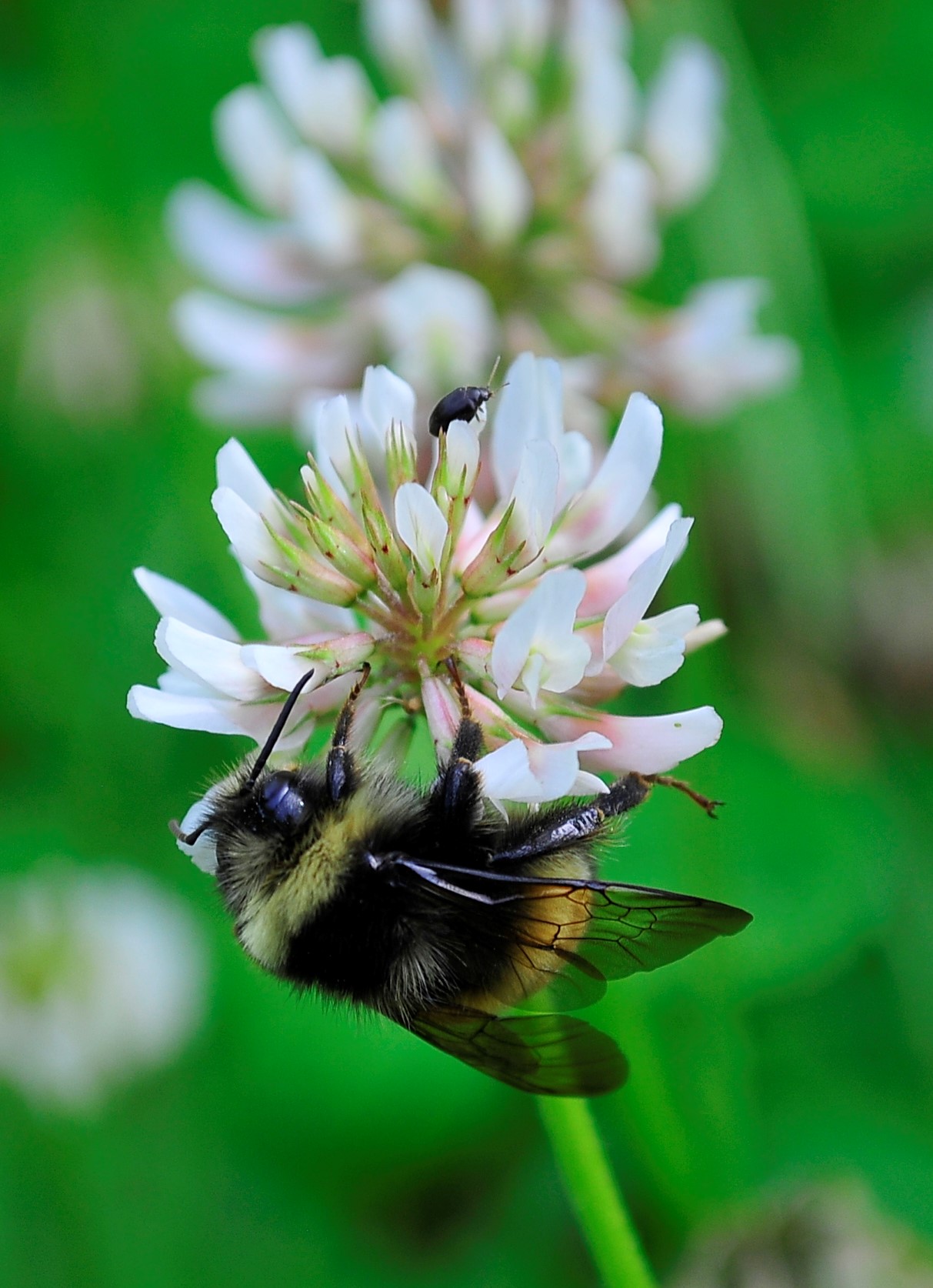
I could have written this post about just about any living thing, but I’m predisposed to notice and care about bumble bees, which I studied during my MSc in Ontario and Colorado. This spring, worried about the lack of bumble bees in my area, I contacted a former lab-mate, now a professor at York University, about what I could do to help pollinators beyond making my garden more hospitable. By coincidence, she had just posted these recommendations on Twitter, and drew my attention in particular to participating in the Citizen Science project Bumble Bee Watch. The data such projects provide to conservation biologists is invaluable, I’m told; and I’ve found it strangely addictive to generate such data for them.

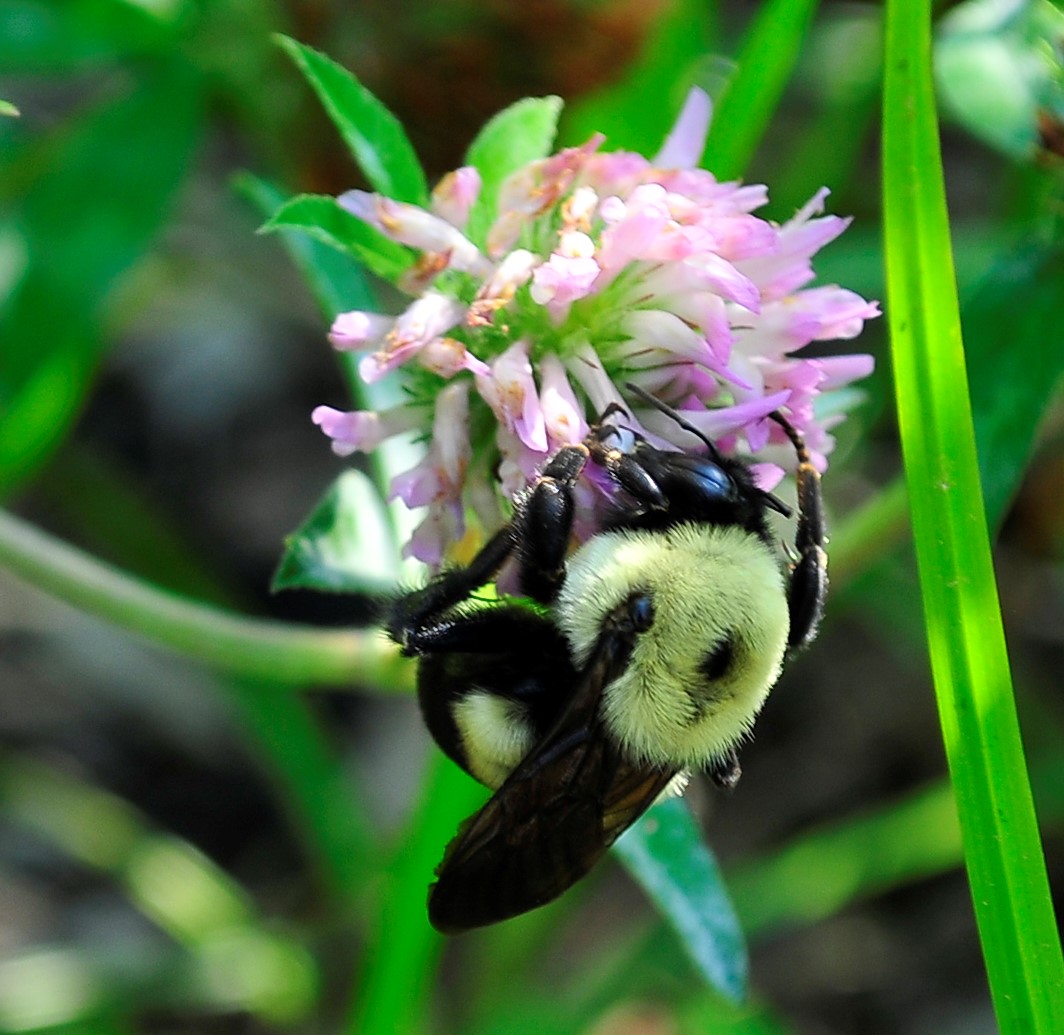
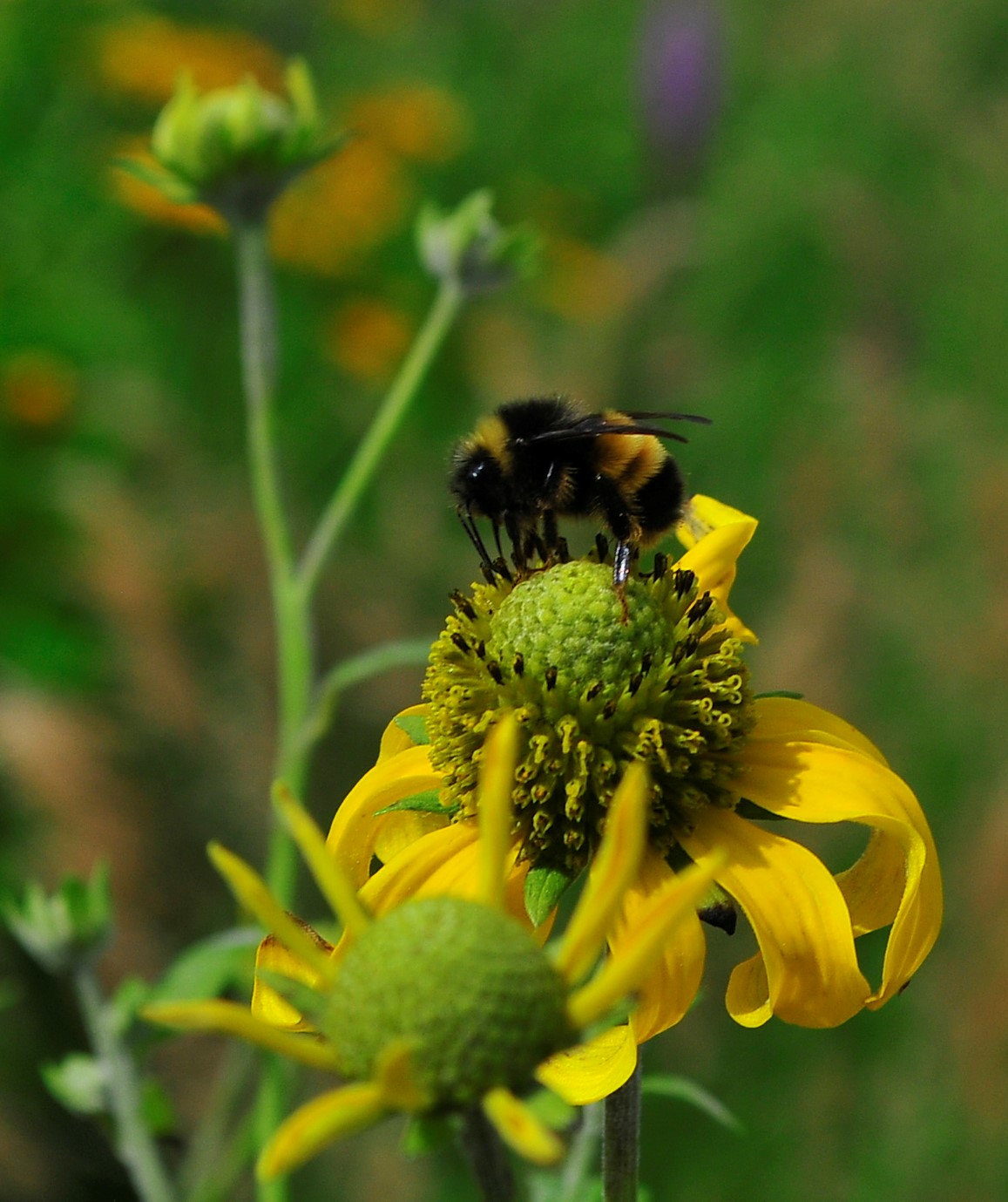
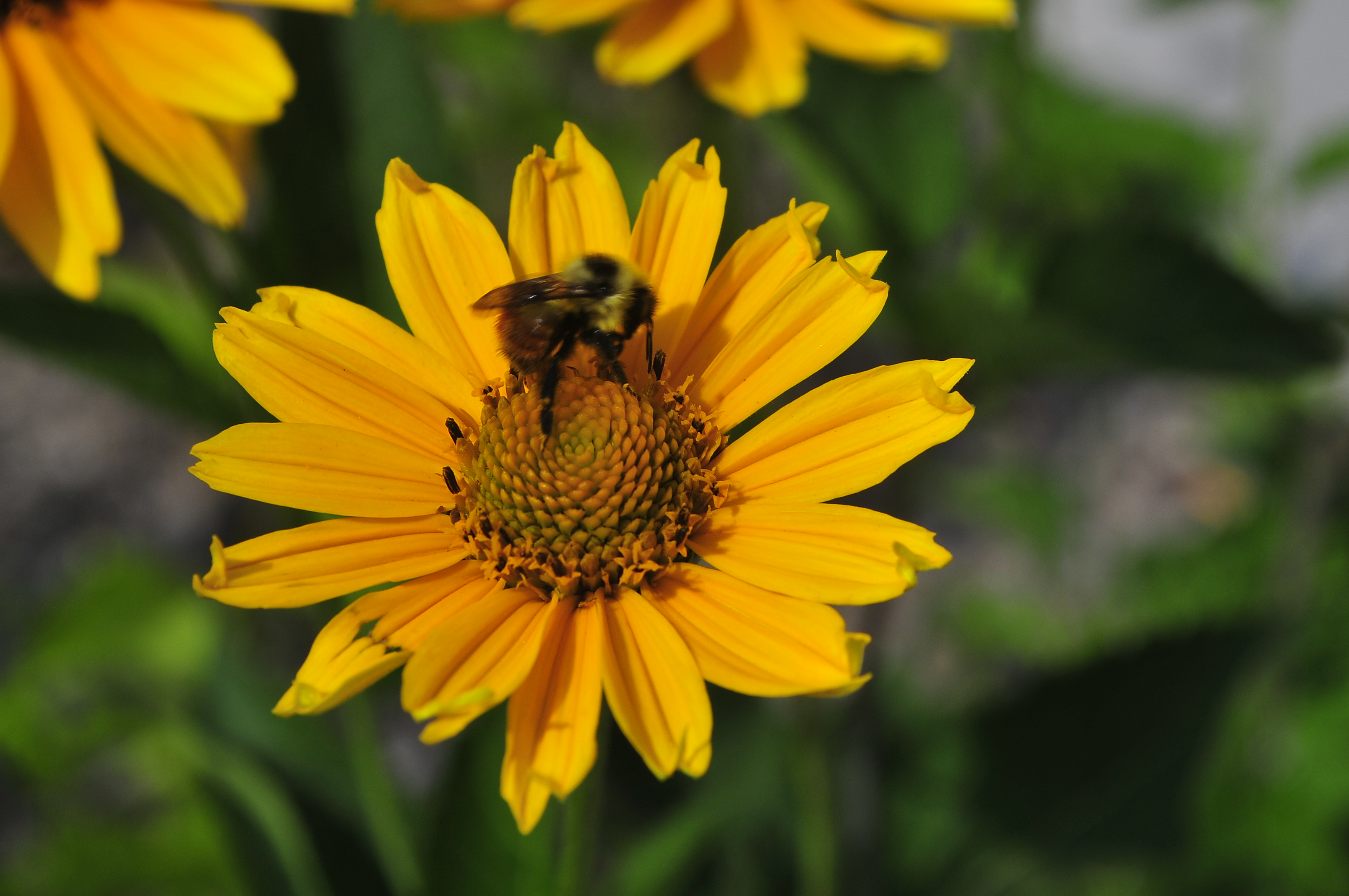
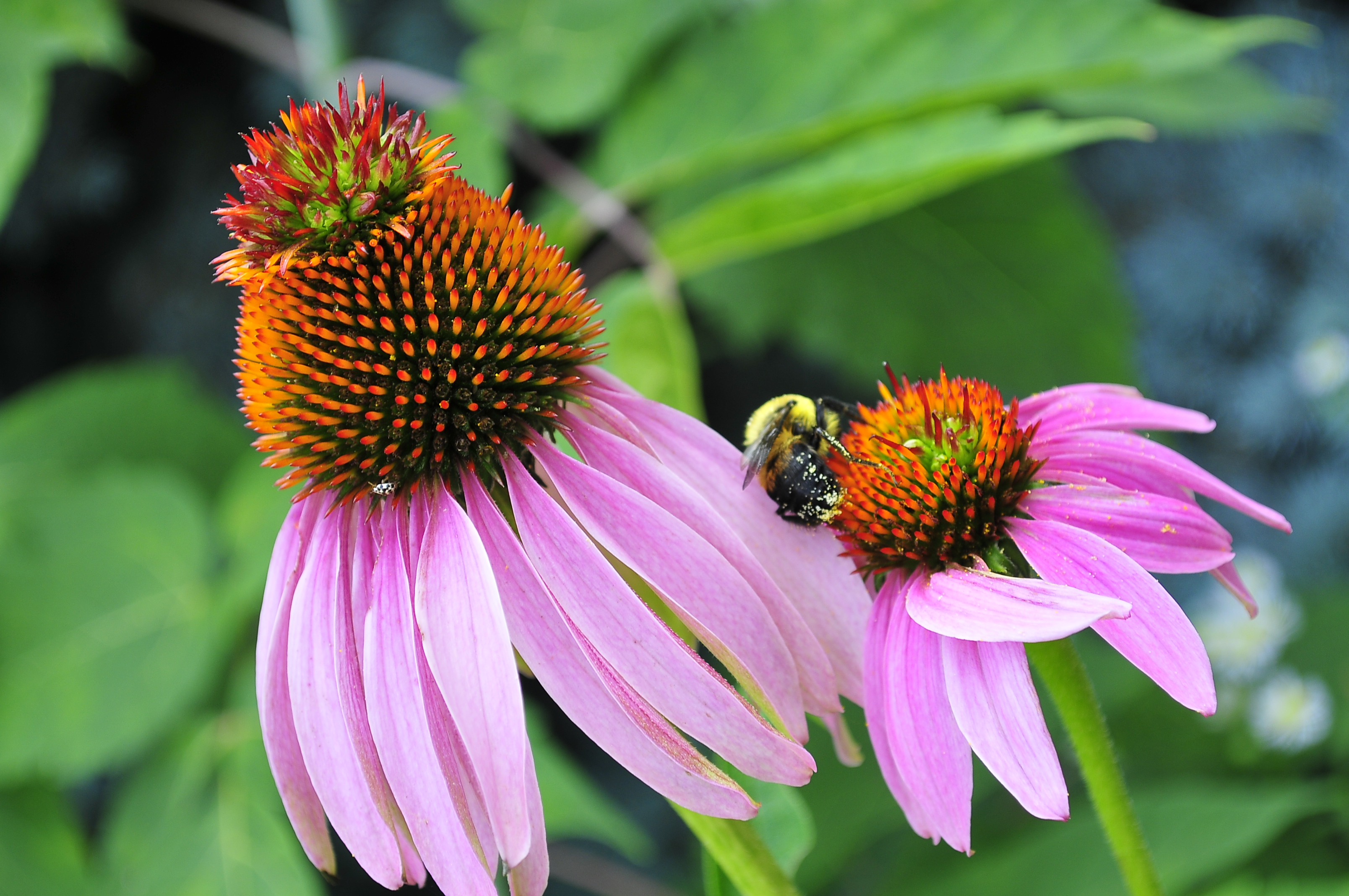
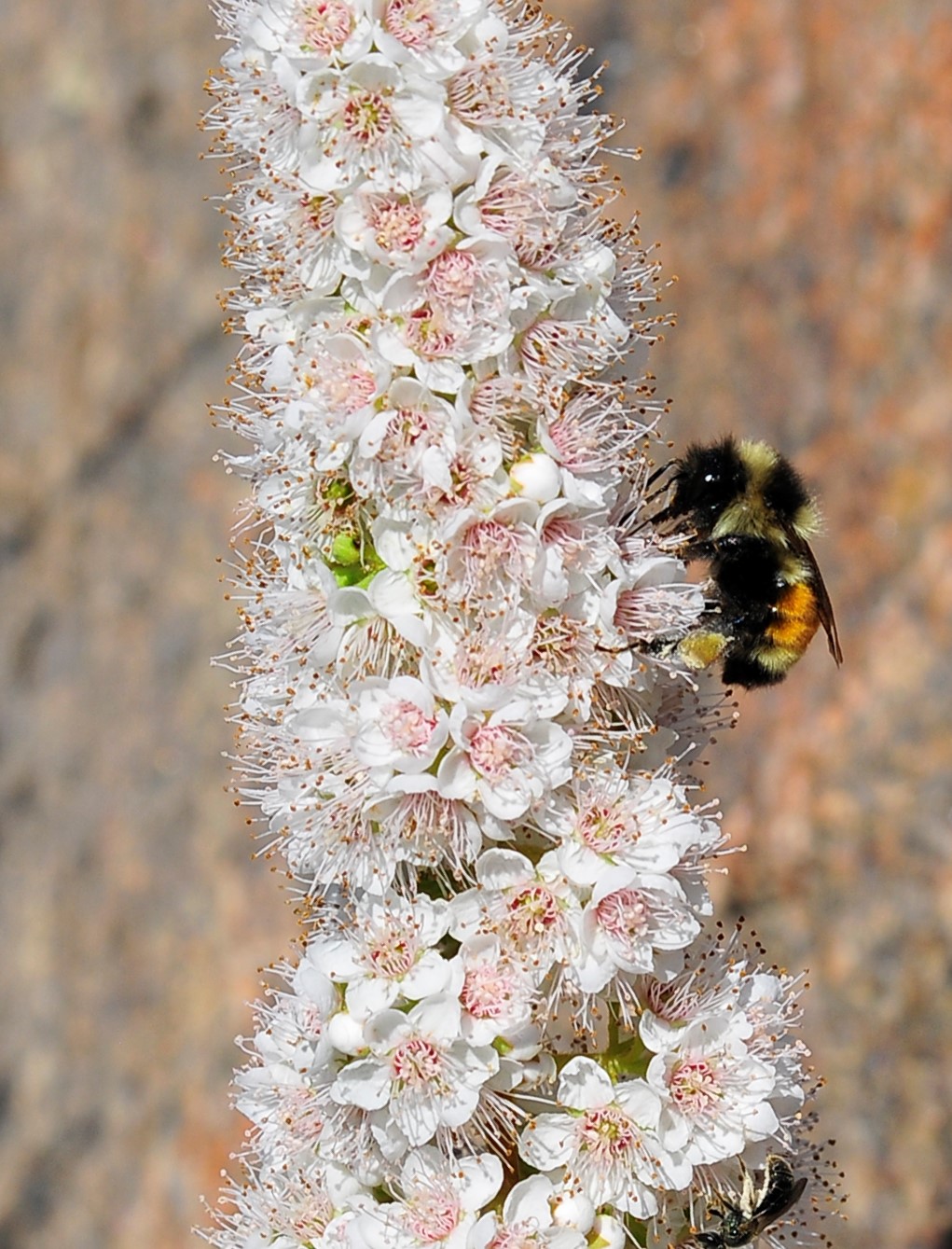
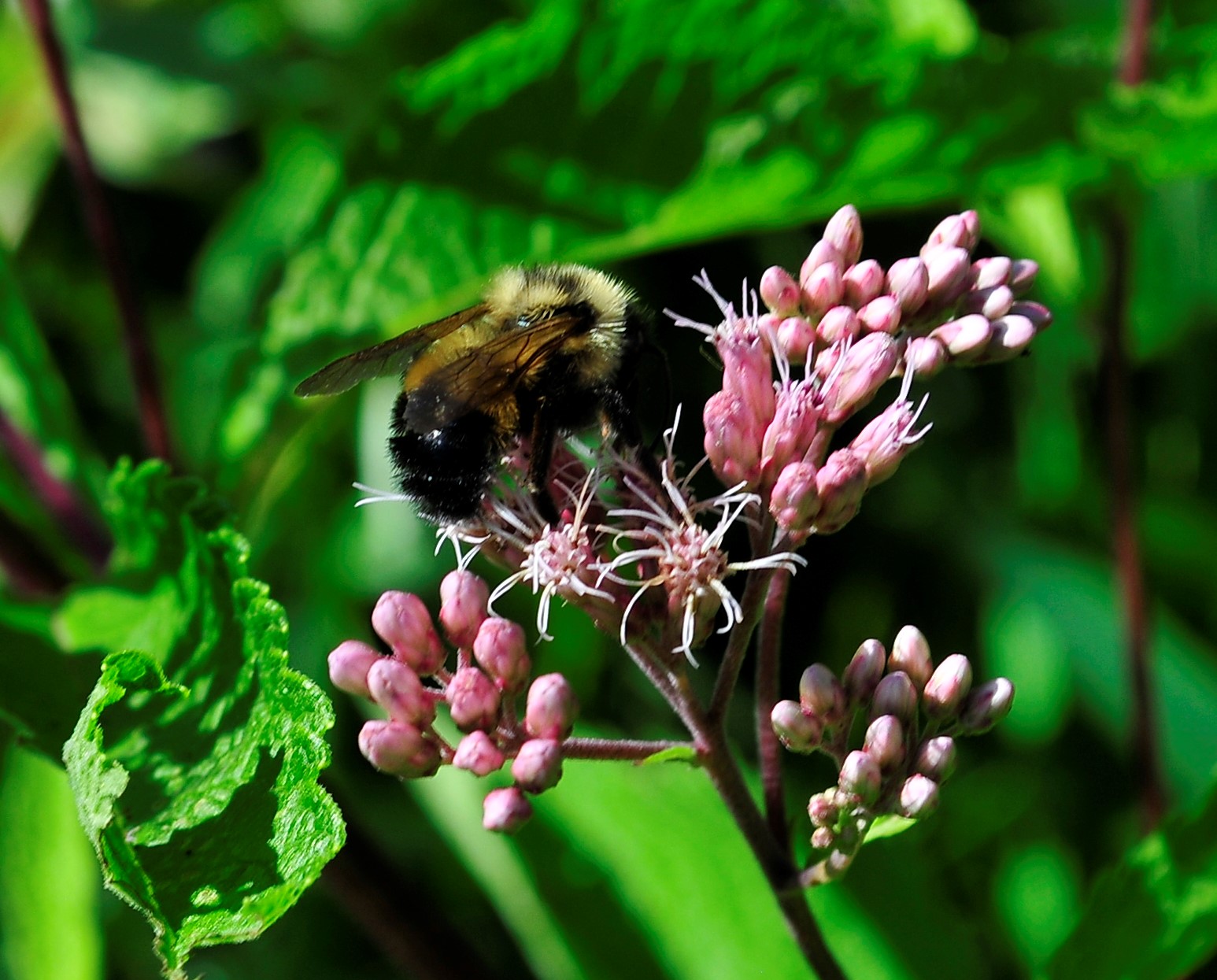
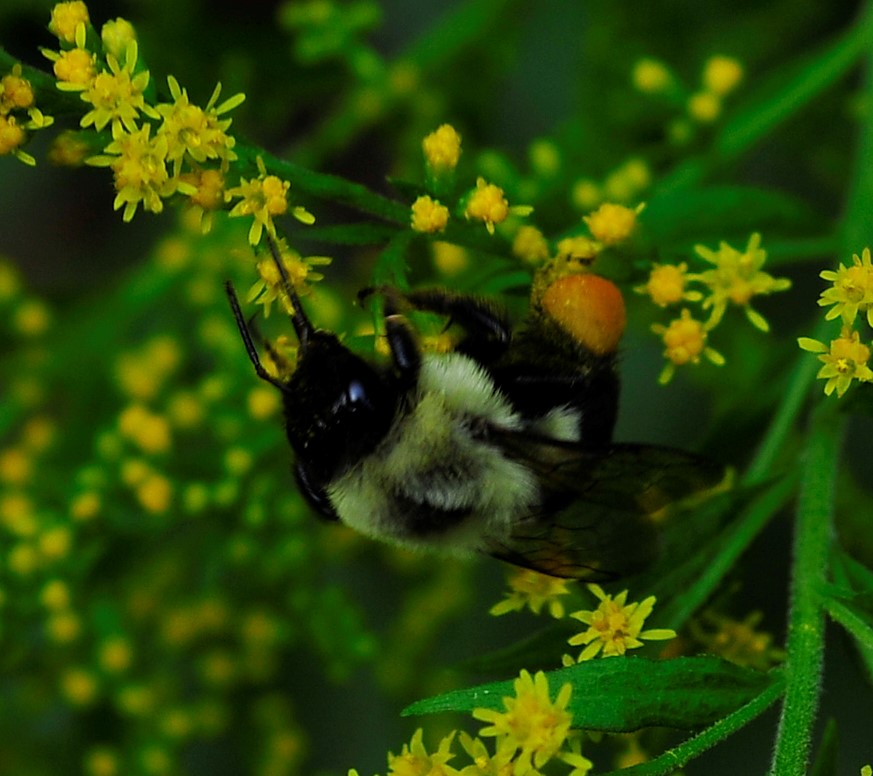
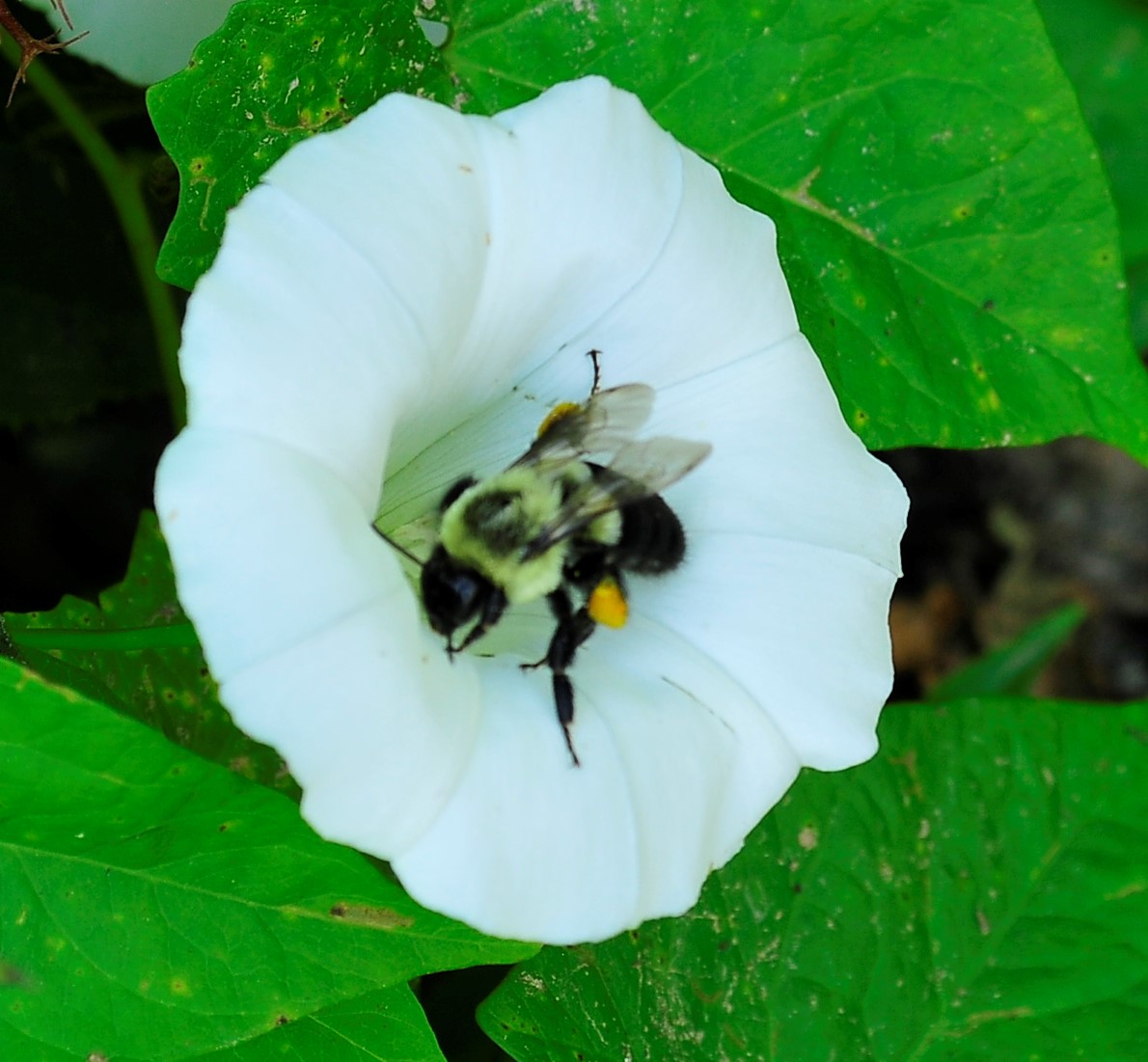
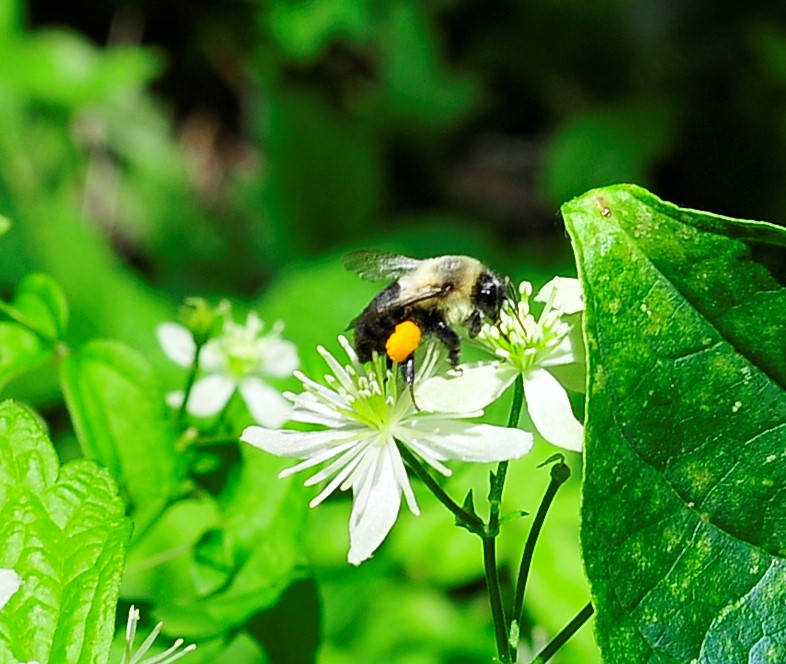
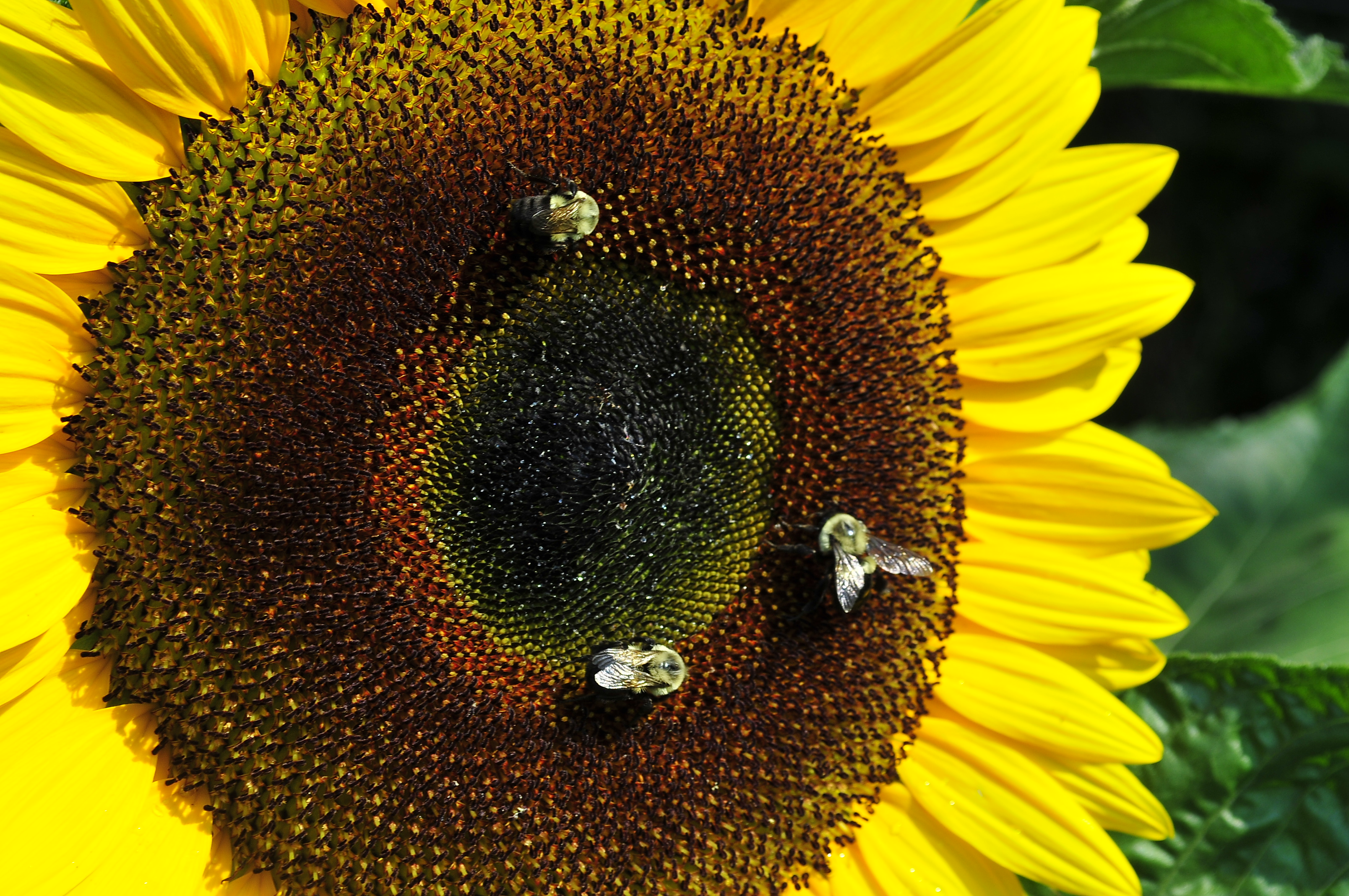
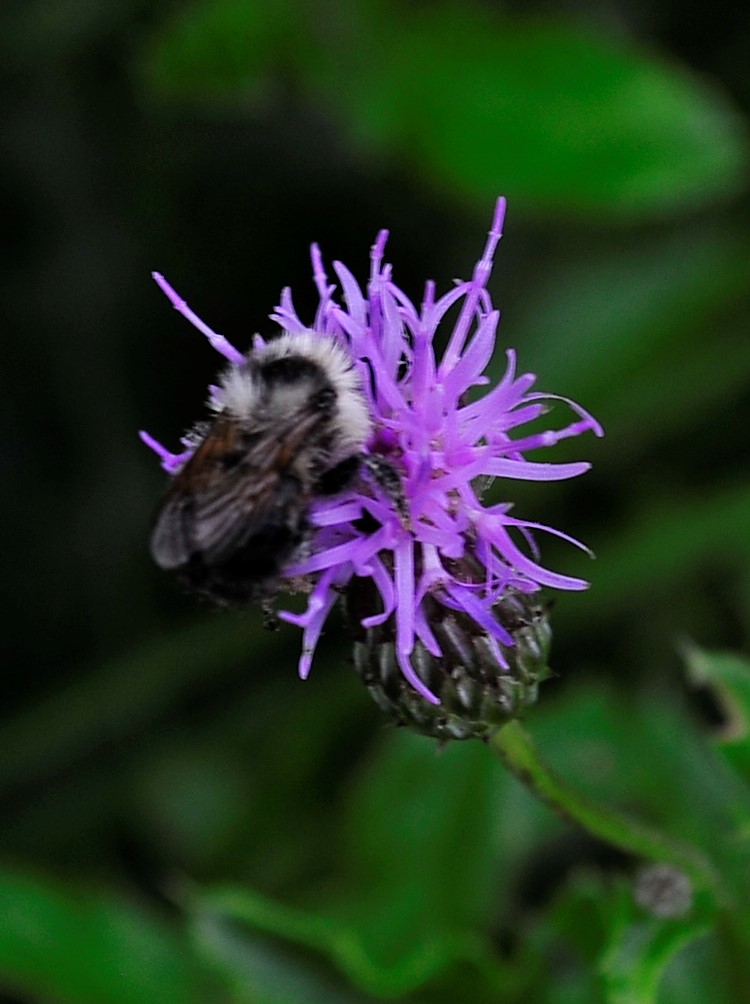
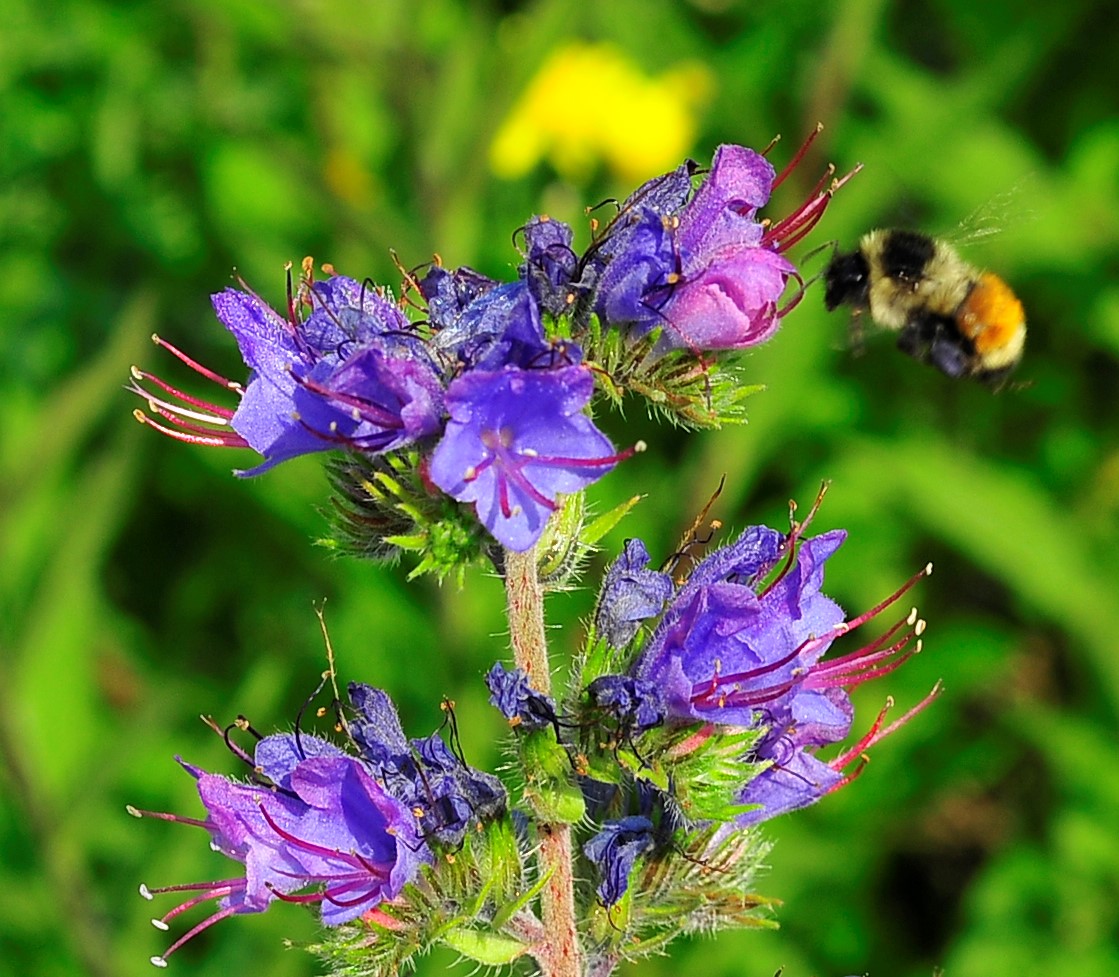
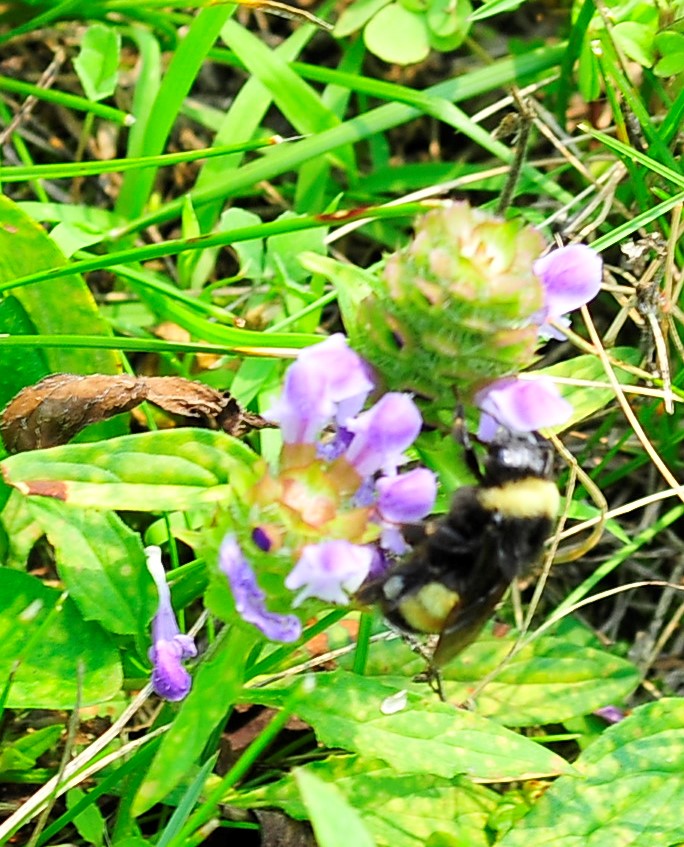
It’s become a bit of an obsession, actually. I now walk around with a camera and exasperate my family by stopping everywhere to take multiple photos of bumble bees. Some are reproduced here, all the photos above and below having been taken since July 2021, across Ontario and Quebec (for IDs and locations, look up my name on Bumble Bee Watch). I also have bumble bee photos dating back to 2002, from my field work and my subsequent ability to care about and notice bumble bees, the many species that coexist and differ subtly in colour pattern and behaviour, and the plants they visit. Bumble bees strike me as the most personable and psychologically interesting of insects, but maybe that’s just because I’ve paid attention to them.

It’s a particular thrill, when something that was just generalized (“bees” or even “bugs”) becomes particularized (“bumble bees” or even “Bombus impatiens,” and beyond that “Bombus impatiens male, or worker, or queen”). I can imagine a Borges short story, in which a character develops the ability to see everything in its absolute particularity. No doubt that would be a curse, and a problem for science. But seeing species only generically–such as my friend who can’t differentiate roses from daffodils, seeing them both simply as “flowers”–is also a curse, both for the beholder and for their community.

I remember playing in the lawn in the backyard when I was about 7 years old, and noticing, quite suddenly, that what had seemed like a uniform carpet of self-same grass was in fact a patchwork of many greens–not just grass, but moss, creeping plants (Creeping Charlie?), and other plants with tiny leaves and flowers.

Comfrey, sage, and fennel, and thyme

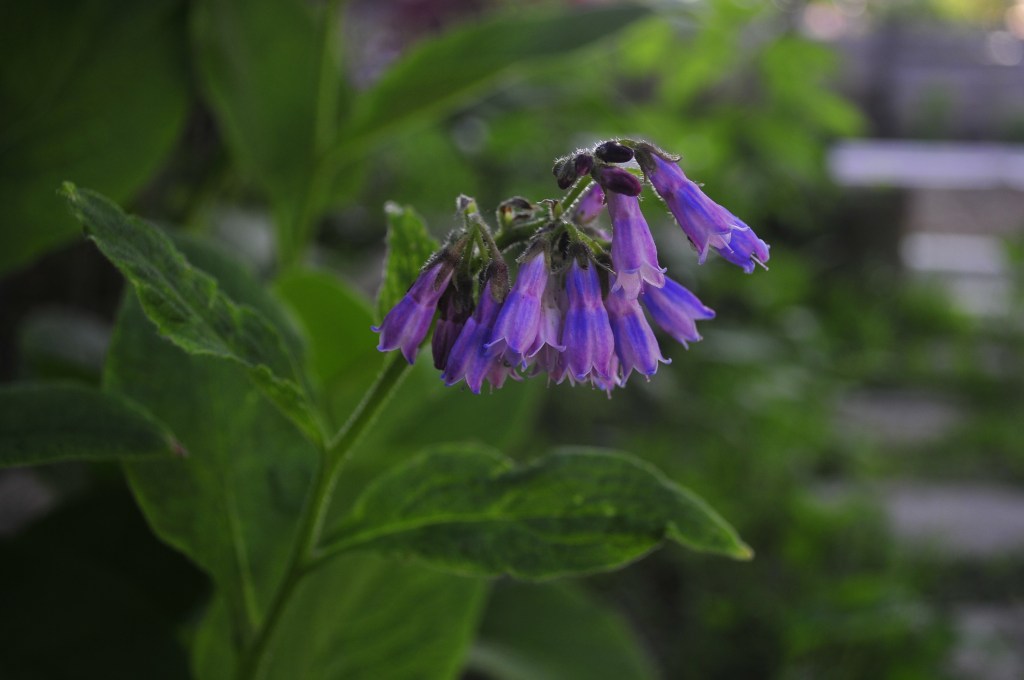
I have been ruthless in removing non-native plants from my garden, even those I planted myself in past years. There are some exceptions, though. Some of these non-natives either flower when little else is there to feed pollinators (forget-me-not, Forsythia), while others are so obviously valued by bees and butterflies that they clearly perform an important role in maintaining and feeding insects. Comfrey (Symphytum asperum) is one of these, an attractive (though prickly) plant whose hanging bell-shaped flowers are favoured by bumble bees (who use “buzzing” to get at its pollen). A bunch of comfrey flowers are in the picture at top left, below. Another non-native I foster is fennel, which I don’t cook with but plant because it seems to be the favourite food plant for swallowtail butterfly caterpillars (they also like Queen Ann’s Lace, but they ignore that if there’s fennel around). Thyme and other minty herbs (oregano, basil, mint) have small flowers that small bees and flies like.

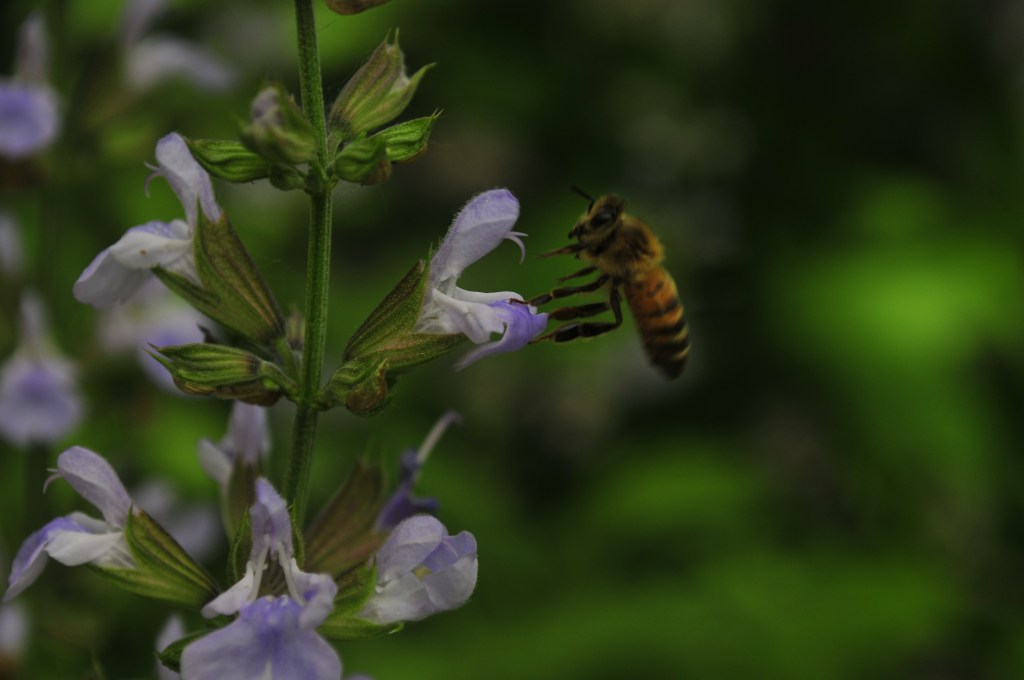
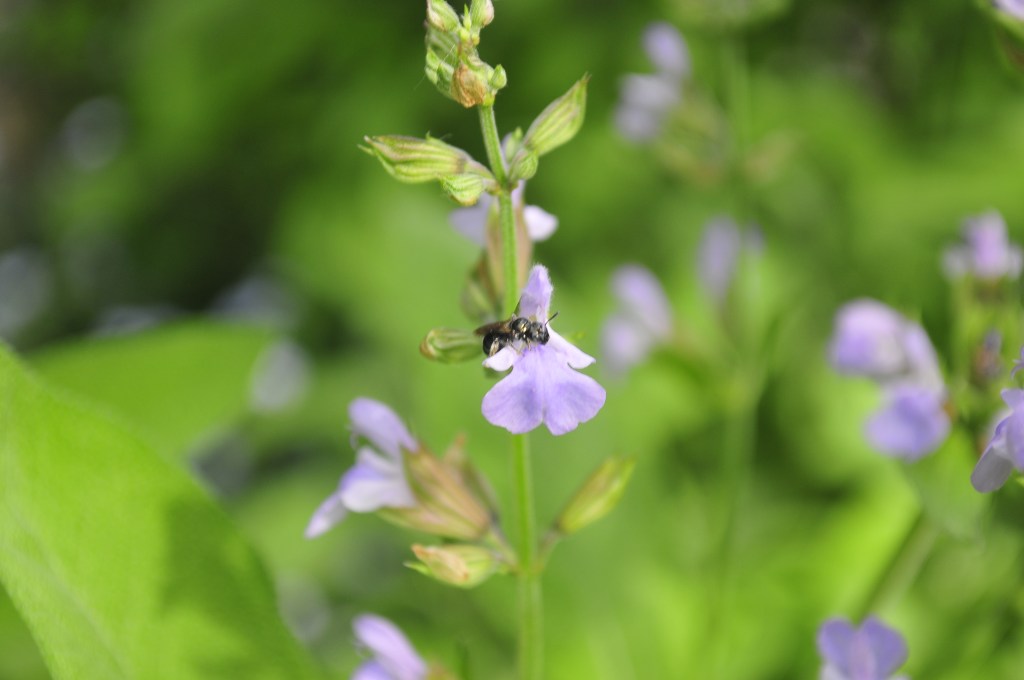
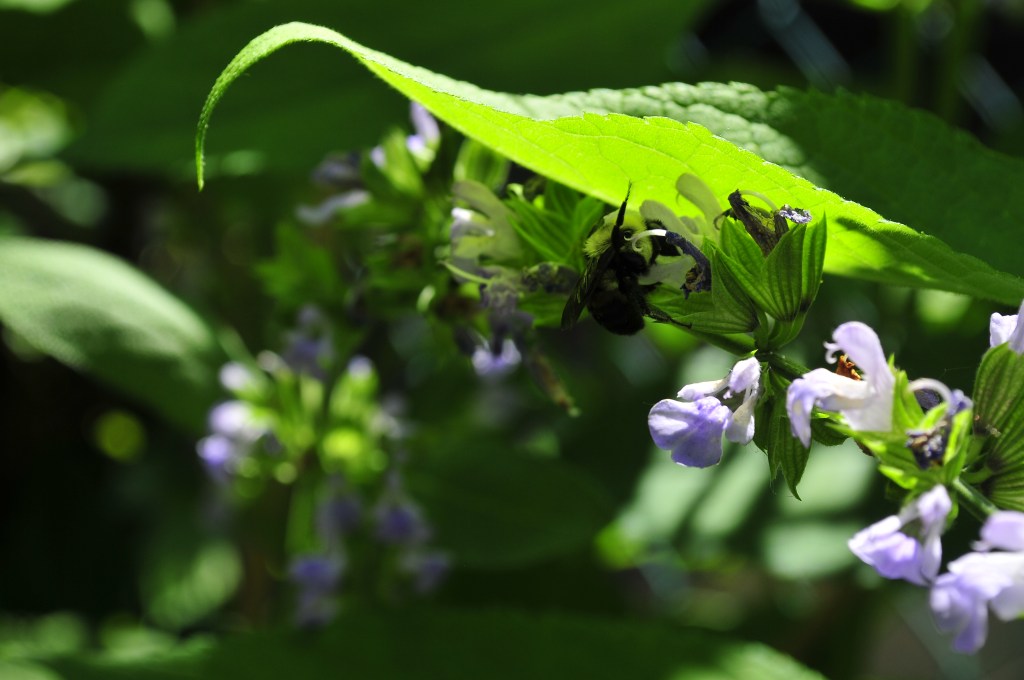
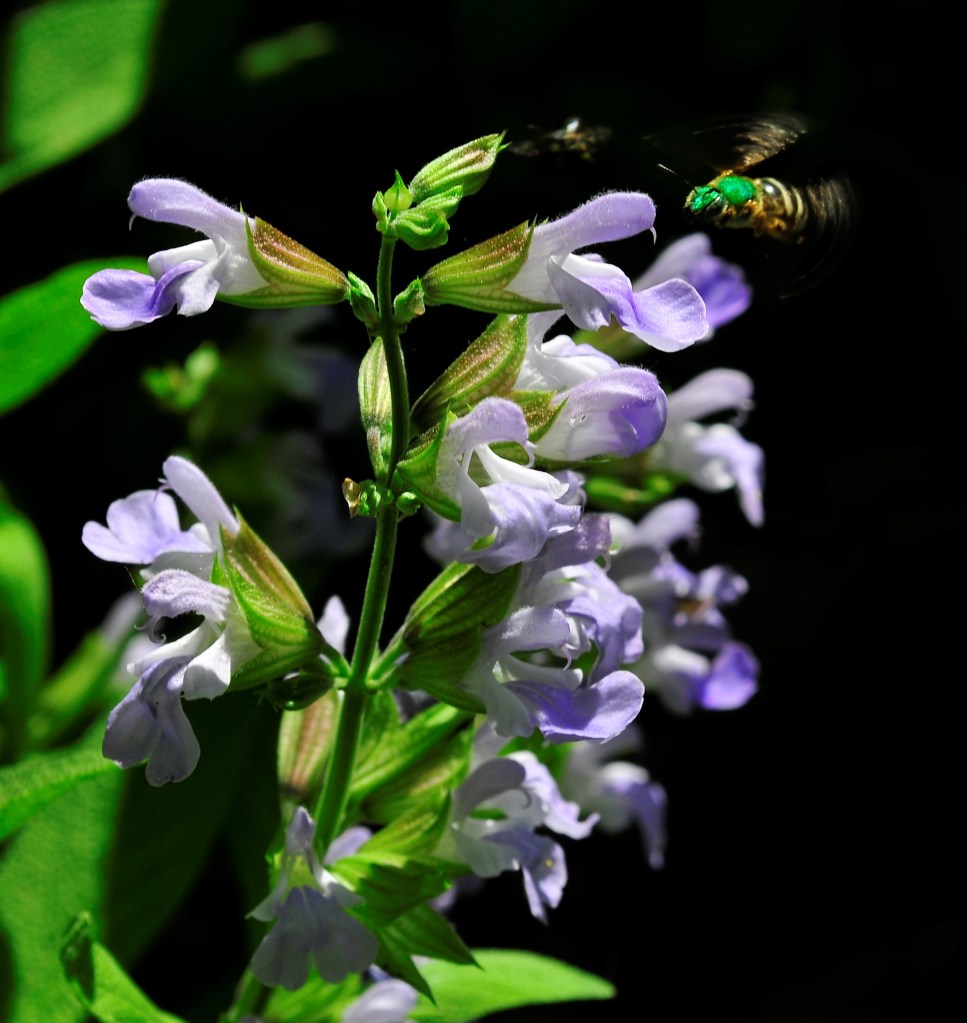
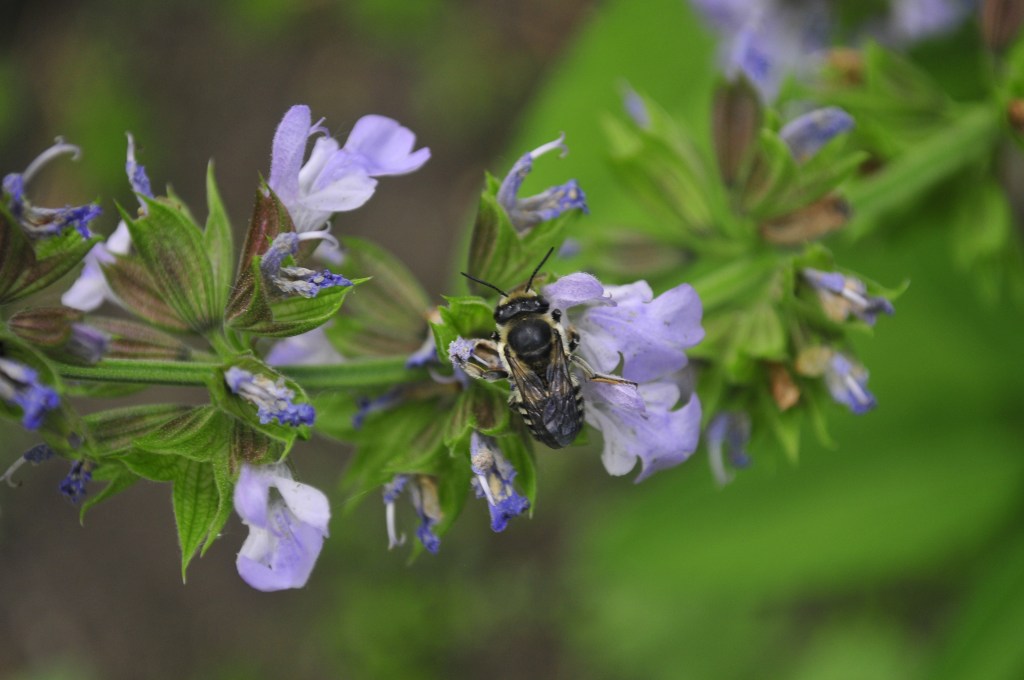
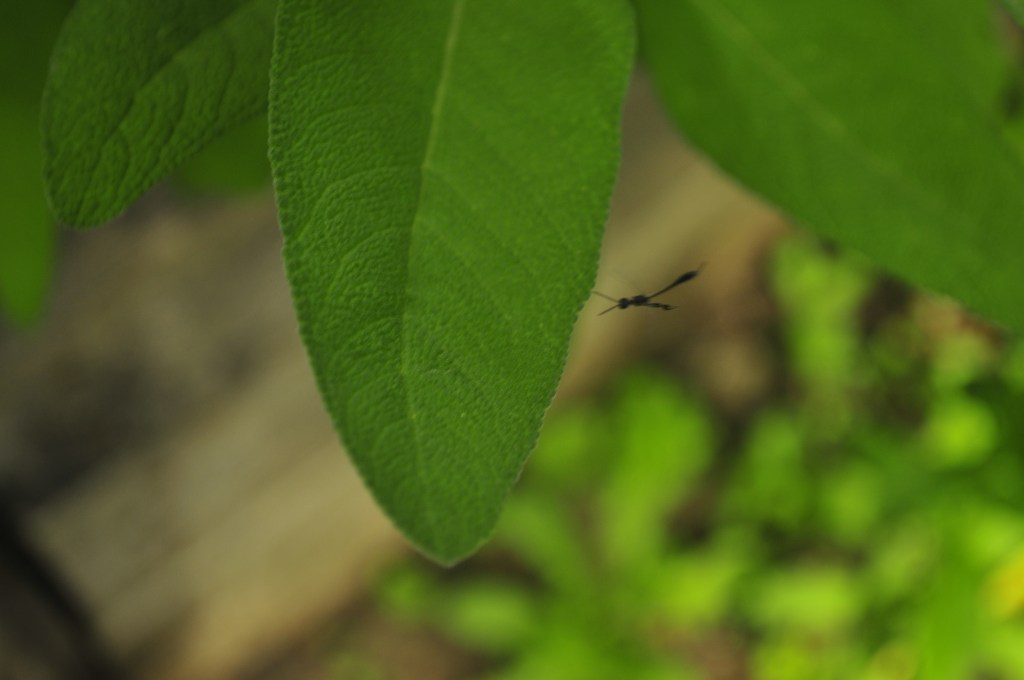
But my favourite, and the biggest draw for bees in my garden, is sage. It flowers in late May and over continues to do so for weeks. Bees of all sizes come for the nectar, and looking down at my big sage plants yesterday I could see the busy traffic of dozens of bees. These include honey bees (Apis mellifera), like the one seen taking off after feeding at a sage flower, top right; Osmia sp., second down from top left; Common Eastern Bumble Bee (Bombus impatiens), second down from top right, using its front leg to hold up a leaf; Bicoloured Agapostemon (Agapostemon viriscens), third down on the left, seen here approaching a sage flower on the wing; the Polyester Bee (Colletes inaequalis), third down from the right; and several others too small for me to recognize. There are also ants feeding on sage nectar and several species of fly, as well as Cabbage White butterflies (Pieris rapae), bottom left. The surfeit of insects also attracts parasitic wasps, one of which I captured in a fuzzy image (bottom right).

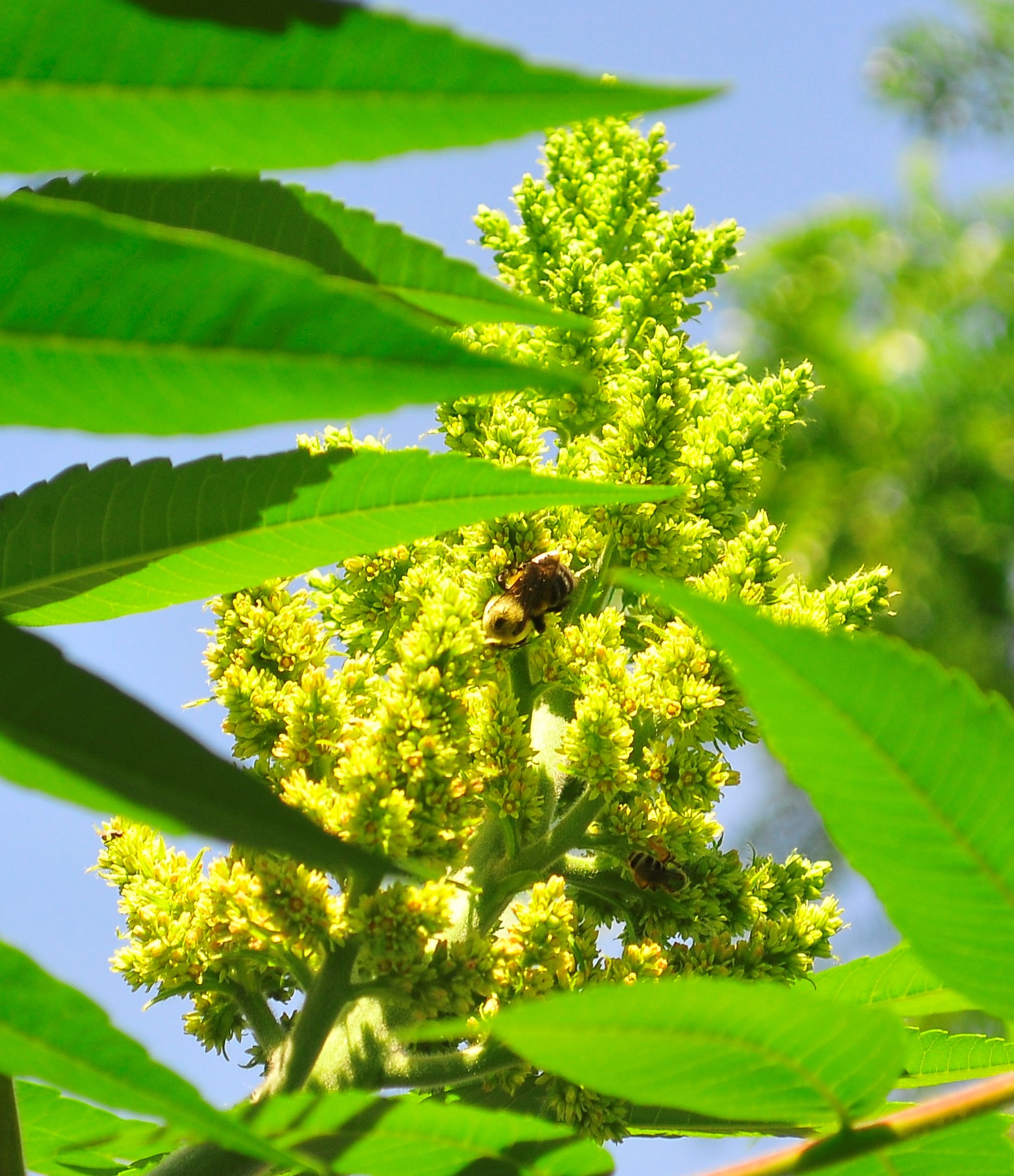
Apart from sage, this week’s major draw for bees was my honey locust tree (Gleditsia triacanthos), which I planted in 2009 as a seedling and which is now taller than the house. It’s the first year that it’s produced a lot of flowers, and the bees are all over it. They also love the Red-Osier Dogwood (Cornus sericea), which is going through a second round of flowering. As the honey locust stops flowering, the staghorn sumac (Rhus typhina) is about to flower; I never imagined that these interesting-looking inflorescences (a bit like Romanesco brocoli) could be appealing to insects, just because they’re green and not showy–but I was wrong. Bees love them:

Fantastic Paragraphs (i)

When it comes to paragraphs in academic writing, I can think of no better approach than Joseph Williams’s as explained in Style: Toward Clarity and Grace. I often teach a distilled version of Williams’s model for coherent and cohesive paragraphs, but his explanation is far more nuanced and capacious than what I cover in workshops.

But for this series of posts what I’m interested in is primarily the ways that creative writers use and abuse the form of the paragraph for effects of various kinds: humour, surprise, reflections of a character’s deranged mind, etc. These strange and interesting paragraphs get much of their power from how they deviate from our expectations of what a paragraph should do.

My first “case study” is a paragraph early in one of the most incredible novels I’ve read recent, Gerard Murnane’s Border Districts (2017). Impossible to explain, this novel is one of my top-ranked books of recent years, generally similar–but only very generally–to other amazing novels including Rachel Cusk’s Outline trilogy and Claire-Louise Bennett’s Pond. I think you can get a fairly good sense of the novel from the paragraph I quote, in which the elderly narrator reflects, over the course is many paragraphs, on his Catholic upbringing. Here it is:

The Holy Ghost, called nowadays the Holy Spirit, was sometimes referred to as the forgotten person of the Blessed Trinity. Not only did I never forget him; he was by far my favourite of the three divine persons. When I was in my tenth year and attending a school conducted by a different order of brothers from those mentioned earlier, my class teacher was a young layman who was in love with the Virgin Mary. He claimed no more than to have a special devotion to the Blessed Virgin, as he mostly called her, but I, who was continually falling in love with personages known to me only from illustrations in newspapers or magazines or from fictional texts–I never doubted that my teacher was truly in love. More than thirty years later, while I was reading some or another passage in the fiction of Marcel Proust about the odd ways of some of another character in love, I remembered that my teacher of long ago would use any pretext for bringing the name of his beloved into classroom discussions. I sensed that my classmates were embarrassed by our teacher’s special devotion, as he called it, but I felt a certain sympathy for him. I was not in love with Mary, but I felt as though I ought to have been so. Of course the name Mary hereabout denotes a mental image. My trouble was that I had never seen on any picture or statue of Mary such a face as I was apt to fall in love with. More than ten years later, I saw too late just such a face as would have won me over earlier. I have not forgotten that this paragraph began as an account of my liking for the Holy Ghost.

Gerard Murnane, Border Districts (Farrar, Strauss & Giroux, 2017): 25-6.